IBPS RRB Salary 2024: In a job, salary is the most significant component. IBPS offers different salaries and pays scales for officers and clerks. Even the job profile and the nature of work are also different for all the posts. Besides a good pay scale, IBPS RRB PO, as well as clerks, are offered other allowances and perks such as dearness allowance, house rent allowance, travel allowances, and others. In this article, we have provided all the details related to IBPS RRB PO and Clerk Salary 2024.
RRB offers a lucrative salary along with various perks and allowances to its employees. Before looking at the post wise salary structure of IBPS RRB, let us look at the IBPS in hand salary that has been given in the below
IBPS RRB PO Salary Structure
A newly selected RRB PO gets the initial basic pay of rupees 36,000. In the table given below, we have covered the basic pay and the allowances that are added to the IBPS RRB PO Salary.
IBPS RRB PO Salary Structure
Earnings
Amount
Basic Salary
36,000
SPL Allowance
5,904
DA
16,740
HRA
2,520
CCA
–
HFA/BFA
–
Gross Pay
61,164
Deductions
4,787
Net Pay
56,377
IBPS RRB PO Salary Deductions
There are certain kinds of amounts that are deducted from the gross salary of IBPS RRB PO like provident fund, national pension scheme, etc. The amount is deducted from the retirement benefits of the probationary officers. Candidates can check the kind of deductions done from IBPS RRB PO Salary 2024.
IBPS RRB PO Salary Deductions
Deductions
Amount
PT
–
PF
–
NPS
4787
Total Deductions
4787
IBPS RRB PO Perks & Benefits
The regional rural banks offer various kinds of perks and allowances to the probationary officer along with basic pay. The complete list of perks and allowances is given below in the tabulated form
IBPS RRB PO Perks & Allowances
Dearness Allowance
46.5% of the basic pay.
House Rent Allowance
For Rural Areas: 5% of the basic pay for Semi-urban Areas: 7.5% of the basic payFor Urban Areas: 10% of the basic pay
Special Allowances
7.75% of the basic pay.
Apart from the allowances given above, there are also the following perks that are given to RRB PO.
City Compensatory allowance
Travel Allowances: Banks fully compensate their employees for the amount spent on travelling for official work or they reimburse the petrol/Diesel expenses
Leased Accommodation: Banks mostly provide their employees either a bank quarter to stay in or an option to lease a house for which the bank is accountable for providing the rent.
Pension scheme
Medical Reimbursement
Newspaper Allowance
Overtime Allowance
IBPS RRB PO Salary: Job Profile & Promotion
Along with IBPS RRB PO Salary 2024, we have also covered the job profile of RRB PO. When a candidate is appointed for the post of IBPS RRB PO he/she undergoes training or is under probation of 2 years. During the probationary period, the candidate receives a fixed amount that is usually less than the normal pay scale. The kind of work that an RRB PO is required to do generally is given below.
To manage the day-to-day banking operations.
Loan disbursement & credit portfolio rating.
To take care of single window operations or being a teller.
Focus on the agricultural schemes and policies for the rural market.
Preparing the audit reports and NPA recovery also forms a major job task.
Apart from the tasks mentioned here, one also has to take care of in-house staff and manage the clerical staff. Running and operations of banks also rely on the Probationary Officer.
IBPS RRB PO Career Growth
Given below is the promotional hierarchy for IBPS RRB PO.
IBPS RRB PO
Assistant Manager
Deputy Manager
Branch Manager
Senior Branch Manager
Chief Manager
Assistant General Manager
Deputy General Manager
General Manager
IBPS RRB Clerk Salary Structure 2024
The starting salary for an IBPS RRB Clerk is Rs 19900 per month and the pay scale of an IBPS Clerk is Rs.19900-1000/1-20900-1230/3-24590-1490/4-30550-1730/7-42600-3270/1-45930-1990/1-47920. Candidates must have additional income and job profile details. Here below table is a quick overview of IBPS RRB Clerk Salary 2024.
IBPS RRB Clerk Salary Structure
Parameters
Amount (Rs.)
Basic Pay
19900
SPL Allow
3263.60
DA Amount
8049.17
HRA Amount
2167.88
CCA Amount
0.00
HFA/BBA
0.00
NPSI
2812.00
CASH
1250.00
Gross Pay
Rs. 37442.65
IBPS RRB Clerk Career Growth/ Promotion
Eligible candidates are first promoted to the senior post on the basis of their performance within the banking organisation. An official of the Indian Bureau of Personnel Selection (IBPS) RRB Clerk will be promoted to the rank of RRB Clerk through internal examinations after working for a period of 3 years. In addition to this, candidates can also appear in Associate Exams such as JAIIB, CAIIB certifications, which gives a great opportunity to stand out from the competition. IBPS RRB clerk 2024 has a broad range of promotions. All the promotions that a candidate will get in the IBPS are to be checked.
Officer Scale-I /Probationary Officer (PO)
Assistant Manager (AM)
Deputy Manager (DM)
Branch Manager (BM)
Senior Branch Manager (SBM)
Chief Manager (CM)
Assistant General Manager (AGM)
Deputy General Manager (DGM)
General Manager (GM)
IBPS RRB Clerk Salary 2024 Job Profile
IBPS RRB Clerk job profile is associated with various responsibilities and duties, making it a challenging role despite the attractive perks, allowances, and salaries. It encompasses not only accounting tasks but also customer service, cash handling, and providing guidance to customers. An IBPS RRB Clerk serves as the primary point of contact for bank-related inquiries and issues, often referred to as a Single Window Operator due to their role.
Here are the key job responsibilities of an IBPS RRB Clerk:
Bank office clerks are deployed in the back office for various tasks like maintenance of ledger, bank receipt collection, handling the daily closure details
Updation of Passbooks of account holders at counters
Printing of receipts for cheques and demand drafts
bank clerks also do hold bank keys, safe keys under their protection
They are often placed at the query window to act as an information counter for the customers.
Handling the deposit and withdrawal cash.
Verification of various documents and proofs submitted by the customers
Responsible for bank cash, various important documents, keys, etc.
Sanctioning of withdrawals by the customers
Maintaining the various documents of the bank, balance sheets, ledger, etc.
Resolving the various issues of the customers
Issuing of Demand Drafts (DDs), bank accounts for the customers, cash receipts, etc
Providing information about the latest schemes and government policies
Guiding customers relating to various banking activities
Attending to treasury works
Resolving queries of the customers
Miscellaneous tasks
IBPS RRB Clerk Salary 2024 Perks and Allowances
We have discussed below the IBPS RRB Clerk Perks and Allowances given to candidates who are selected for the post of IBPS RRB Clerk.
IBPS RRB Clerk Salary 2024 Perks and Allowances
Dearness Allowance (DA)
46.5% of the basic pay.
House Rent Allowance (HRA)
For Rural Areas: 5% of the basic pay For Semi-urban Areas: 7.5% of the basic pay For Urban Areas: 10% of the basic pay
Special Allowances
7.75% of the basic pay.
Travel Allowances
Rs. 425
FAQs
Q. What is the In-Hand Salary of IBPS RRB Clerk 2024?
Ans: The In-Hand salary of an IBPS RRB Office Assistant ranges between Rs. 19900
MPPSC Previous Year Question Papers: Exam preparation can be completed by solving the MPPSC Previous Year Question Paper PDF. It helps you identify weak areas, improve speed and accuracy, identify important subjects, and understand the exam format. Candidates preparing for the MPPSC Exam 2024 may find great value in the MPPSC Previous Year Question Papers.
The previous year’s papers for MPPSC are available for download in PDF format in this post, so candidates can make successful use of this resource for their preparation. These papers give candidates important insights into the kinds of questions that could be on the coming exam, helping them to better understand the criteria and get used to the format of the exam. Check the official notification to get complete details of the Exam.
Table of Contents
MPPSC Previous Year Question Papers
The MPPSC holds the MPPSC each year to find eligible candidates for various Madhya Pradesh civil service jobs. To understand more about the whole MPPSC Previous Year Question Papers overview, see the table below:
MPPSC Eligibility Criteria Overview
Conducting Body
Madhya Pradesh Public Service Commission (MPPSC)
Exam Name
MPPSC State Services Exam
Application Mode
Online
Exam Mode
Online
Exam Category
UPSC and State PCS
Type of Job
Government Job
Frequency
Once a year
Exam Level
State Level
Vacancies
227
Selection Stages
Prelims, Mains, and Personality exam
Eligibility Criteria
Graduation
Medium of Exam
English and Hindi
MPPSC Previous Year Question Paper PDF
To gain insights into the question format and nature of the MPPSC Exam, candidates are advised to thoroughly familiarize themselves with the MPPSC Previous Year Question Papers. As the MPPSC Notification 2023 has recently been released for the upcoming MPPSC Exam 2023, candidates must kickstart their preparation by referring to these papers. By studying the MPPSC Previous Year Question Paper PDFs and devising a well-thought-out strategy, candidates can effectively plan their approach to the exam. To assist candidates in this endeavor, we have provided the MPPSC Previous Year Papers, along with a downloadable link for the MPPSC Previous Year Paper PDF.
Benefits of Solving MPPSC Previous-Year Question Papers
The following is a list of the benefits of completing MPPSC Previous Year Question Papers:
It helps students evaluate how well they have prepared and concentrate on correcting their mistakes to get good exam marks.
Completing the MPPSC Previous Year Question Papers will improve their accuracy, time management, and speed in answering questions all through the exam.
They will be able to identify their strong and weak points and prioritize topics for proper preparation by completing MPPSC Previous Year Papers.
They may learn about the topics that are frequently asked in the exam, as well as their importance and difficulty level, by trying to solve MPPSC Previous Year Question Papers with solutions PDF
MPPSC Previous Year Question Papers Pattern
Candidates who want to know the grading system used by the recruiting officials, as well as the paper format, question type, and mark distribution, can examine the MPPSC exam pattern. Every wrong answer will result in a deduction of one-third (0.33) of a mark. There will be three phases to the MPPSC 2023 exam. The table below shows the MPPSC exam pattern for each of the three stages:
MPPSC Previous Year Question Papers Exam Pattern
Exam Name
Type of the Exam/Duration
Marks
MPPSC Prelims Exam
General Studies-Objective (2 Hours)General Aptitude exam- Objective (2 Hours)
Q1 – Are MPPSC Previous Year Question Papers available online?
Ans – The MPPSC Previous Year Question Papers are available online in PDF format. You can get the free PDF of the previous year’s exam questions from Physics Wallah. Candidates who log on to the website can download these PDFs.
Q2 – Can solving MPPSC Previous Year Question Papers guarantee success?
Ans – MPPSC Previous Year Question Papers help prepare for the MPPSC Exam, which depends on basic understanding, regular practice, and careful preparation.
Q3 – How can I access MPPSC Previous Year Question Papers?
Ans – You can download the MPPSC previous year question papers PDF from trustworthy sources like Physics Wallah and the official website.
Conclusion: We have provided You the MPPSC Previous Year Paper PDF. Now download these papers and start preparing for the MPPSC Recruitment. Stay Connected with DreamBigInstitution.com for the latest exam updates and study materials| PDF | Notes.
UPSC EPFO Previous Year Question Paper: Union Public Service Commission had released the notification for the recruitment of EPFO and the exam will take place in the month of May. This is the best time to start your preparation, if you have applied for this recruitment because you will be competing with thousands of students in the UPSC EPFO Enforcement Officer exam.
In order to help you, so that you have an idea about the types of questions asked in the examination, we are providing previous years’ question papers here. Solving previous year exam papers are very important as it can bring the best in your preparation. So, In this article, we are providing you with UPSC EPFO Enforcement Exam previous year paper. Download UPSC EPFO Enforcement Officer Previous years’ papers now.
UPSC EPFO Previous Year Question Paper PDF Download Here
Practise with the below provided UPSC EPFO Previous year Question Papers and boost your preparation for the upcoming UPSC EPFO Exams as they are of various benefits as mentioned below:
The candidates can boost their exam preparation with previous year papers as these give an idea about the exam pattern followed by the Union Public Service Commission.
The candidates can have good practice on time management which is very important during the final exam.
Practising previous year papers will help to improve your question-solving speed and identify your weak points.
The candidates can have good knowledge about the marking scheme that will help them prepare for the exam accordingly.
UPSC EPFO Previous Year Question Paper PDF
Download the Memory-based UPSC EPFO Previous year papers pdf from the below table if you are preparing for Enforcement Officer (EO)/ Accounts Officer (AO) examination.
Ans: UPSC EPFO previous year papers play an important role in a candidate’s examination preparation. Previous year question papers comprise important questions. It can be treated as a model paper because it will help candidates understand the exam pattern in a better way.
Q. What is the importance of practicing the UPSC EPFO previous year papers?
Ans: Attempting the UPSC EPFO previous year papers carry immense essentiality. By attempting the UPSC EPFO previous year papers they will be able to analyze their mistakes and areas of weaknesses, henceforth upgrade their preparation strategy accordingly.
Conclusion: We have provided the UPSC EPFO Previous Year Question Paper to you. Now download these papers and start preparing for the UPSC EPFORecruitment. Stay Connected with Dream Big Institution for the latest exam updates and study materials| PDF | Notes.
Recent Trends in the Indian Money Market in Details: include a shift towards digital transactions and online platforms, as well as increased government regulations and oversight. The Reserve Bank of India (RBI) has implemented measures to promote financial inclusion and accessibility, such as the introduction of new digital payment systems and mobile banking options. The government has also introduced several policies to encourage investment in the money market, such as tax incentives for certain types of investments and lower interest rates on loans. The Indian economy has been hit hard by the Covid-19 pandemic and it has also affected the money market. The government has also announced a series of measures to boost the economy, such as lowering interest rates, increasing liquidity, and providing fiscal stimulus. These measures are expected to help stabilize the money market and promote economic growth in the coming months.
The money market is a segment of the financial market in which financial instruments with high liquidity and short maturities are traded. The money market is used by participants as a means for borrowing and lending in the short term, with maturities that usually range from overnight to just under a year.
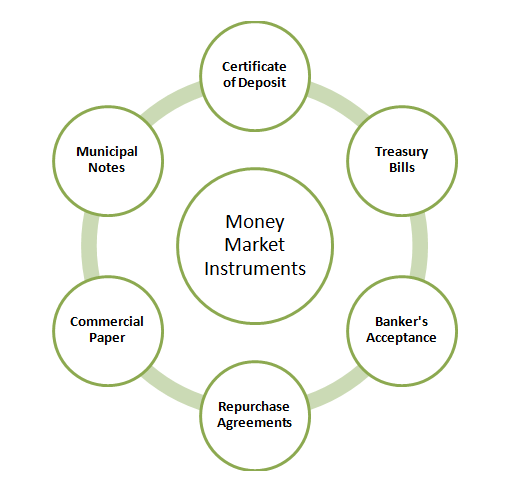
Examples of money market instruments include Treasury bills, commercial paper, certificates of deposit, and bankers’ acceptances. These instruments are issued by governments, financial institutions, and corporations and are typically considered to be low-risk investments.
The money market is important because it provides companies and governments with a means of raising short-term capital, and it also allows individuals and institutions to invest cash for a short period with a relatively low level of risk. The money market also plays a key role in the overall functioning of the economy by facilitating the flow of funds between savers and borrowers.
In all of these cases, the money market is characterized by a high degree of safety and relatively low rates of return.
The money market involves the purchase and sale of large volumes of very short-term debt products, such as overnight reserves or commercial paper.
An individual may invest in the money market by purchasing a money market mutual fund, buying a Treasury bill, or opening a money market account at a bank.
Money market investments are characterized by safety and liquidity, with money market fund shares targeted at $1.
Features of the Indian Money Market:
The RBI is very affected by the working of the Indian Money Market. Along these lines, proficiency of the Money Market is extremely important.
The money market plays several important roles in the Economy:
Facilitating the flow of funds: The money market provides a platform for the borrowing and lending of short-term funds between various participants, including governments, financial institutions, and corporations. This helps to ensure that there is a steady flow of funds available for various economic activities.
Providing short-term investment opportunities: The money market offers investors a way to earn a return on their cash holdings while keeping the investment low-risk. This is important for individuals and institutions who have short-term liquidity needs.
Managing liquidity: The money market helps to manage the overall liquidity in the economy by providing a way for financial institutions to borrow and lend funds on a short-term basis. This helps to ensure that there is enough cash available to meet the needs of the economy.
Setting Interest Rates: The money market helps to determine the level of interest rates in the economy. The rate at which money market instruments are traded reflects the overall level of demand for funds and the level of risk associated with lending funds. This rate, in turn, serves as a benchmark for other interest rates in the economy.
Reducing Risk: The money market helps to reduce the risk of economic downturn by providing a stable source of short-term funding for companies, banks and other financial institution.
1. Parts of the Money Market: The Indian market is portrayed by the nearness of different sorts of budgetary foundations, for example, Non-Banking Financial Intermediaries, Cooperative Banks, Export-Import banks, indigenous loan specialists et cetera. They oblige the money-related requirements of various parts.
2. Indigenous Markets: Money Market is about indigenous segments like indigenous loan specialists et cetera. Numerous Non-Banking Financial Companies (NBFCs) have come up, which raise assets from the overall population. NBFCs are outside the control and supervision of the RBI.
3. Rates of Interest: Indian Money Market is portrayed by decent variety in loan fees. Prime illustrations are the Government acquiring rates, store and loaning rates of business banks, store and loaning rates of co-agent banks et cetera. This assorted variety is a result of the fixed status of assets from one area of the currency market to another.
4. Unpredictable Call Money Market: Indian Call Money Market rate is very unstable. In crest season it might shoot up to 7-8%. Be that as it may, in the slack season it tumbles to as low as 0.5%. RBI attempts to direct this instability in the Call Money Market by providing extra subsidies when supply is short and when call rates are high. Likewise, it ingests the extra subsidies when Call Money Market has surplus assets. Sadly, despite every one of the endeavors made by RBI, the changes in the Call Money Market rates keep on being high.
5. Composed and Unorganized Sectors: The Indian Money Market has two divisions, Organized Sector, and Unorganized Sector. The collaboration and contact between the areas aren’t excessively incredible. Likewise, the rate of enthusiasm for both the business sectors varies broadly.
6. Occupied and Slack Seasons: Owing to fluctuating interest for assets, there are two seasons in the Indian currency Market, to be specific, the bustling season and the slack season. November to April is the bustling season as agrarian items come into the market during this time. Along these lines, the interest for assets during this period is high. May to October is the slack season. During this time, reserves are compensated and interest for reserves falls.
7. The strength of Government Securities: Indian Money Market is overwhelmed by Government Securities and Semi-Government Securities.
8. Immature Bill Market: Indian Money Market has an immature Bill Market. Because of this, it has no Acceptance and Discount Houses.
9. Remote Money Markets: There is no development of assets between the Indian Money Market and Foreign Money Markets. Be Wise, Get Rich.
Indian currency advertisement is separated into two segments:
1) Unorganized cash market :
The unorganized cash market refers to the informal and unregulated market for cash transactions, typically involving small amounts of money. This market operates outside of the formal banking system and is not subject to government regulations and oversight.
Examples of unorganized cash market include street vendors, hawkers, small shops and other small businesses that mainly deal in cash transactions. The transactions in this market are mainly conducted in cash, and there is no formal record keeping or documentation.
This market is often characterized by high interest rates, lack of transparency, and a higher risk of fraud. It can also be difficult for individuals and small businesses to access credit from traditional financial institutions, leading them to turn to the unorganized cash market for loans.
The Reserve Bank of India has made several efforts to formalize the unorganized cash market by promoting financial inclusion and digital payments. However, it still remains a significant portion of the economy and can present various challenges for the government and financial institutions.
2) Organized cash market :
The composed currency advertisement is that part that goes under the administrative ambit of RBI and SEBI. Governments (Central and State), Discount and Finance House of India (DFHI), Mutual Funds, Corporate, Commercial, or Cooperative Banks, Public Sector Undertakings, Insurance Companies, Financial Institutions, and Non-Banking Financial Companies (NBFCs) are the key players of Organized Indian Money Market. The structure of the composing currency market of IndiaThe sorted-out currency showcase in India is anything but a solitary market. It is a blend of business sectors of different instruments.
Call cash or notice money all cash, see cash, and term currency markets are sub-markets of the Indian currency showcase. These business sectors give assets to the here and now. Loaning and obtaining from the call currency advertise for 1 day. Whereas loaning and acquiring assets from seeing currency showcase is for 2 to 14 days. Furthermore, when there is obtaining and loaning of assets for the tenor of over 14 days, it alludes to “Term Money”.
Treasury billsThe Bill advertising is a sub-market of this market in India. There are two sorts of bills in the currency showcase. They are treasury bills and business charges. The treasury bills are otherwise called T-Bills, T-bills are issued by the Central bet for the benefit of the Government, through Commercial Bills are issued by Financial Institutions. Treasury bills don’t yield any premium, yet it is issued at rebate and reimbursed at the standard at the season of development. In T-charges there is no danger of default; it is a protected speculation instrument.
The business billsCommercial charge is a currency advertisement instrument which is like the bill of trade; it is issued by a Commercial association to fund-raise for here-and-now needs. In India, the members of the business charge advertising are banks and money-related institutions.
Authentication of deposit certificate of Deposits otherwise called CDs. It is a debatable currency advertisement instrument. It resembles a promissory note. Rates, terms, and sums change from establishment to organization. Compact discs guessed exchanged publically neither one of them is exchanged on any exchange. In general foundations issue testament of the store at rebate all over-esteem. The banks and money-related establishments can issue CDs on a gliding rate basis.
Business papers business paper is another currency advertisement instrument in India. We additionally call business paper CP. CP alludes to a fleeting unbound currency advertise instrument. Enormous companies with great FICO assessments issue business papers as promissory notes. There is no security bolster for CPs. Subsequently, just vast firms with impressive budgetary quality can issue the instrument.
Currency advertises shared assets (MMMFs)Money Market Mutual Funds were presented by RBI in 1992 and since 2000 they are brought under the control of SEBI. It is an open-finished common reserve that puts resources into here-and-now obligation securities. This sort of shared store is a shared store that exclusively puts resources into instruments of this market.
Repo and turn around repo market repo signifies “Repurchase Agreement”. It exists in India since December 1992. REPO implies pitching security under consent to repurchase it at a foreordained date and rate. The individuals who bargain in government securities utilize repo as medium-term borrowings.
Functions of the Indian Money Market:
Currency markets are a standout amongst the most critical instruments of any creating money-related framework. In its place of simply guaranteeing that the currency advertises in India manages the stream of credit and credit rates, this instrument has risen as one of the huge strategy devices with the administration and the RBI to control the budgetary arrangement, cash supply, credit creation, and control, swelling rate and by and large monetary approach of the State. Along these lines, the first and the main capacity of the currency advertise component are administrative in nature. While deciding the aggregate volume of credit plan for the six-month to month time spans, the credit approach additionally goes for coordinating the stream of credit according to the needs settled by the legislature as indicated by the prerequisites of the economy. Acknowledge strategy as an instrument is critical to guarantee the accessibility of the credit in adequate volumes; it likewise takes into account the credit needs of different divisions of the economy. The RBI helps the administration to understand its approaches identified with the credit designs all through its statutory power over the saving money arrangement of the nation.
The budgetary approach then again has a longer-term viewpoint and goes for amending the irregular characteristics in the economy. Credit strategy and the money-related arrangement both adjust each other to accomplish the long-haul objectives solid disapproved by the legislature. It does not just keep up add up to power over the credit creation by the banks, yet additionally keeps a nearby watch over it. The instruments of money-related strategy tallying the repo rate money save proportion and bank rate are utilized by the Central Bank of the nation to give the important heading to the financial approach.
Swelling is one of the serious monetary issues that all the creating economies need to confront occasionally. Patterned changes do impact the value level contrastingly relying on the request and supply circumstance at the given purpose of time. Currency advertises rates assume a fundamental part in controlling the value line. Higher rates in the currency markets diminish the liquidity in the economy and have the impact of decreasing the monetary action in the framework. Lessened rates then again increment the liquidity in the market and cut down the cost of capital extensively, in this manner raising the speculation. This capacity additionally helps the RBI to control the general cash supply in the economy.
Recent Trends in Indian Money Market in Details (FAQ)
Q. What is the money market explained?
Ans: The money market is defined as dealing in debt of less than one year. It is primarily used by governments and corporations to keep their cash flow steady, and for investors to make a modest profit. The capital market is dedicated to the sale and purchase of long-term debt and equity instruments
Q. What is the money market called?
Ans: Money market trades in short-term financial instruments commonly called “paper”. This contrasts with the capital market for longer-term funding, which is supplied by bonds and equity
Q. What are the 4 types of money?
Ans: The 4 different types of money as classified by the economists are commercial money, fiduciary money, fiat money, andcommodity money.
Q. How can I trade the money market?
Ans: The money market and its instruments are usually traded over the counter, and therefore, cannot be done by standalone individual investors themselves. It has to be done through certified brokers, or a money market mutual fund.
Q. What is the nature of the money market?
Ans: The money market is an organized exchange market where participants can lend and borrow short-term, high-quality debt securities with average maturities of one year or less. It enables governments, banks, and other large institutions to sell short-term securities.
Q. What affects the money market?
Ans: The money market determines the interest rate. The demand for money in the money market is affected by income (which is determined in the goods market). B. The goods market determines income, which depends on planned investment.
Q. Which currency is strongest in the world?
Ans: Kuwaiti dinar
We hope you Like this Post If any other important information related to Recent Trends in Indian Money Market has been missed in this article, then you must tell in the comment box so that more friends can be helped. Thanks
List of Dams in India: In This Article, We are Providing You with Detailed Information about the List of Dams in India With Complete Details like the Highest dam in India,the largest dam in India, a Map of Dams in India, the Importance of Dams in India The general awareness section in various exams like the Bank exam, SSC exam, Insurance exam, or the most coveted Civil Service exam comprises questions related to important dams in India. Candidates can download the list of dams in India pdf given below. The purpose of the dams in India along with the state and rivers pdf is provided below.
Static Gk is Scoring Parts in Every Competitive Exam. Candidates Who are Preparing for Govt Exam Like Banking SSC Railway UPSC LIC Must Do This Chapter.
Important Dams in India: Dams in India play a vital role in the country’s sustainable development and resource management efforts. As one of the world’s most populous nations, India faces the challenge of meeting growing energy demands and ensuring efficient water management for agriculture and industry. Dams serve as reservoirs of water and sources of hydroelectric power, providing solutions to these challenges. This article will include some of the major dams in India and their significance in water management, irrigation, hydroelectric power generation, and flood control.
Table of Contents
Important Dams in India
Dams are structures that control the flow of water, creating reservoirs with various purposes such as flood control, irrigation, drinking water supply, industry, aquaculture, and navigation. They are often combined with hydropower plants to generate electricity. Unlike floodgates or levees, which control water flow into specific areas, dams primarily retain water. India hosts numerous important dams serving various functions. Let’s look into some of these significant dams in India.
Important Dams in India List
These are some of the important dams in India along with their respective states and rivers they are built on.
Important Dams in India List
Name of Dam
State
River
Bhavani Sagar Dam
Tamil Nadu
Bhavani
Tungabhadra Dam
Karnataka
Tungabhadra
Rihand Dam
Uttar Pradesh
Rihand
Maithon Dam
Jharkhand
Barakar
Koyna Dam
Maharashtra
Koyna
Bisalpur Dam
Rajasthan
Banas
Mettur Dam
Tamil Nadu
Kaveri
Krishnarajasagar Dam
Karnataka
Kaveri
Indira Sagar Dam
Madhya Pradesh
Narmada
Cheruthoni Dam
Kerala
Cheruthoni
Sardar Sarovar Dam
Gujarat
Narmada
Nagarjuna Sagar Dam
Telangana
Krishna
Hirakud Dam
Odisha
Mahanadi
Bhakra Nangal Dam
Punjab-Himachal Pradesh Border
Sutlej
Tehri Dam
Uttarakhand
Bhagirathi
State-wise Important Dams in India
State-wise Important Dams in India is as follows:
State-wise Important Dams in India
Name of Dam
State
Somasila Dam
Andhra Pradesh
Srisailam Dam
Andhra Pradesh
Bhakra Nangal Dam
Himachal Pradesh and Punjab Border
Pandoh Dam
Himachal Pradesh
Nathpa Jhakri Dam
Himachal Pradesh
Chamera Dam
Himachal Pradesh
Baglihar Dam
Jammu and Kashmir
Dumkhar Hydroelectric Dam
Jammu and Kashmir
Uri Hydroelectric Dam
Jammu and Kashmir
Maithon Dam
Jharkhand
Chandil Dam
Jharkhand
Panchet Dam
Jharkhand
Tunga Bhadra Dam
Karnataka
Linganamakki Dam
Karnataka
Kadra Dam
Karnataka
Alamatti Dam
Karnataka
Supa Dam
Karnataka
Krishna Raja Sagara Dam
Karnataka
Harangi Dam
Karnataka
Narayanpur Dam
Karnataka
Kodasalli Dam
Karnataka
Malampuzha Dam
Kerala
Peechi Dam
Kerala
Idukki Dam
Kerala
Kundala Dam
Kerala
Parambikulam Dam
Kerala
Walayar Dam
Kerala
Mullaperiyar Dam
Kerala
Neyyar Dam
Kerala
Rajghat Dam
Uttar Pradesh and Madhya Pradesh Border
Barna Dam
Madhya Pradesh
Bargi Dam
Madhya Pradesh
Bansagar Dam
Madhya Pradesh
Gandhi Sagar Dam
Madhya Pradesh
Yeldari Dam
Maharashtra
Ujani Dam
Maharashtra
Pawna Dam
Maharashtra
Mulshi Dam
Maharashtra
Koyna Dam
Maharashtra
Jayakwadi Dam
Maharashtra
Bhatsa Dam
Maharashtra
Wilson Dam
Maharashtra
Tansa Dam
Maharashtra
Panshet Dam
Maharashtra
Mula Dam
Maharashtra
Kolkewadi Dam
Maharashtra
Girna Dam
Maharashtra
Vaitarna Dam
Maharashtra
Khadakwasla Dam
Maharashtra
Gangapur Dam
Maharashtra
Singur Dam
Telangana
Radhanagari Dam
Maharashtra
Lower Manair Dam
Telangana
Mid Manair Dam
Telangana
Upper Manair Dam
Telangana
Nizam Sagar Dam
Telangana
Jalaput Dam
Andhra Pradesh and Odisha Border
Indravati Dam
Odisha
Hirakud Dam
Odisha
Vaigai Dam
Tamil Nadu
Perunchani Dam
Tamil Nadu
Mettur Dam
Tamil Nadu
Govind Ballabh Pant Sagar Dam / Rihand dam
Uttar Pradesh
Tehri Dam
Uttarakhand
Dhauli Ganga Dam
Uttarakhand
Types of Important Dams in India
Here are the various types of dams found in India:
Arch Dam: These concrete dams curve upstream, utilizing the hydrostatic pressure to push against their arch shape, reinforcing the structure against the force of the water. They are ideal for narrow canyons or gorges with sturdy rock walls.
Gravity Dam: Built from concrete or stone masonry, these dams rely on their weight and resistance against the foundation to withstand the horizontal pressure of the water pushing against them. Each part of the dam is designed to be stable and independent.
Arch-Gravity Dam: Combining features of both arch and gravity dams, these structures narrow as they turn upstream, directing water pressure against the canyon walls while lessening the lateral force pressing on the dam.
Barrages: These are low-head, diversion dams consisting of several large gates that can be opened or closed to regulate the flow of water, maintaining the river’s elevation upstream for various uses, including irrigation.
Embankment Dams: These substantial man-made dams are constructed by compacting semi-plastic mounds of soil, sand, clay, or rock compositions. They typically have a solid, impermeable core and a semi-permeable natural waterproof covering.
Rock-Fill Dams: Constructed with compacted granular earth embankments, these dams have an impermeable zone. They are composed of earth with a significant proportion of large particles.
Concrete-face Rock-Fill Dams (CFRD): These dams consist of rock-fill with concrete slabs on their upstream face. The concrete slab acts as both an impervious wall to prevent leaks and a structure capable of withstanding uplift pressure.
Earth-Fill Dams: Also known as earthen dams, these are constructed with well-compacted earth embankments. They may be made entirely of one material or have a drain layer to capture leak water while maintaining homogeneity.
Roles of Dams
Dams are important in India’s water management and development, offering significant advantages:
Water Supply: Major dams ensure a consistent water supply for domestic, industrial, and agricultural purposes. They store water during rainy seasons and release it during dry periods, ensuring a reliable water source.
Hydroelectric Power: Many dams are equipped with hydroelectric power stations, harnessing flowing water to generate electricity. This contributes to India’s energy requirements and reduces reliance on fossil fuels.
River Navigation: Dams regulate water flow, facilitating river navigation and maintaining navigable channels. This improves transportation, enhancing connectivity and trade through efficient inland waterway navigation.
Recreation: Reservoirs formed by dams offer recreational activities like fishing and boating, serving as popular tourist destinations. This boosts local economies and provides leisure opportunities for residents and visitors alike.
Flood Control: Dams help control floods by storing excess water during heavy rainfall and releasing it gradually. This mitigates sudden surges, minimizing the risk of downstream flooding and safeguarding lives and property.
FAQs
Q. How Many Dams are There in India
ANS: There are Total 3200 Dams in India Include major /medium dams
Q. Which is the First Dam in India?
Ans:Kallanai Dam is the first dam in India Water Running across the Kaveri river in Tiruchirappalli District and THANJAVUR District of the state Tamil Nadu
Q. Which state has Highest Dams in India?
Ans: Maharashtra has the Highest Number of dams with a total of 2354 dams, including 2069 completed and 285 under construction
Q. Which is the Highest Dam in India?
Ans: The Tehri Dam is The Highest Dam in India. It is located in the state of Uttarakhand.
Q. Which is the oldest dam in Karnataka?
Ans:Vani Vilasa Sagara Dam is The Oldest Dam in Karnataka
India, land of rivers has a huge potential for the construction of massive dams, owing to its geographical features. In the north lies the Himalayan Mountains, in middle India lies the Plateaus, whereas in southern India have Western and the Eastern Ghats along the ocean boundaries of the country. India has already constructed a huge number of several dams and water reservoirs, with approximately 4300 already-constructed large dams. Moreover, several projects are in the pipeline. Check the highest, longest oldest and other important dames in India along with reservoirs in the article below which help in various examinations like UPSC, State PSC, SSC, Bank Exams etc.
List of Rivers in India: Discover India’s Rivers Ganges in the north to Kerala’s backwaters in the south. Complete list with lengths, origins, and tributaries. In 2023, numerous Defense Exams will take place, and candidates are eager for essential GK information. Below, we present a comprehensive list of rivers, their lengths, origins, and tributaries relevant to exams like BSF, CISF, CDS, Territorial Army, etc.
A river is a natural waterway of freshwater, flowing toward an ocean, sea, lake or any other river. Most of India’s major rivers flow eastwards and fall into the Bay of Bengal. There are only five rivers in India that flow from east to west, Narmada, Mahi, tapti river, luni and sabarmati and fall into the Arabian Sea. Here we have brought details related to the complete list of major rivers of India and the rivers and their tributaries in India. Also, Check Riverside Cities in India
List of Rivers of India pdf
Rivers in India
In the diverse tapestry of India’s geography, rivers play a fundamental and fascinating role. These majestic water bodies, akin to lifelines, weave through the country’s plains, mountains, and plateaus, shaping its landscapes and nurturing its people. India’s rivers are not just geographical features; they are repositories of culture, history, and spirituality. In this journey through the meandering waters of India, we will explore the significance, stories, and serenity that these rivers bring to the subcontinent.
Indian River System
Let’s explore major River Systems through a table that provides details about their respective lengths.
Indian River System
River System
Total length
Length in India
Indus River System
3180 km
1114 km
Brahmaputra River System
2900 km
916 km
Ganga River System
2510 km
2510 km
Yamuna river System
1376 km
1376 km
Tapi River System
724 km
724 km
Narmada River System
1312 km
1312 km
Krishna River System
1400 km
1400 km
Cauvery River System
805 km
805 km
Godavari River System
1465 km
1465 km
Mahanadi River System
851 km
851 km
Indian Rivers
The majority of rivers in India flow into the Bay of Bengal, while a few pass through the western part and fall into the Arabian Sea. Inland drainage exists in certain regions, such as northern Aravalli range, parts of Ladakh, and the arid Thar Desert. The major rivers in India originate from three main watersheds:
The Himalaya and the Karakoram range
The Chota Nagpur plateau and Vindhya and Satpura range
The Western Ghats
Indus River System
Origin: The Indus River originates in the northern slopes of the Kailash range in Tibet, near Lake Mansarovar.
Course: It follows a north-westerly course through Tibet.
Length: It has a total length of about 2897 km from the source to the point near Karachi where it falls into the Arabian Sea, with approximately 700 km lying in India.
Entry into India: It enters the Indian Territory in Jammu and Kashmir where it forms a picturesque gorge.
Joining Tributaries: In the Kashmir region, it joins with several tributaries – the Zaskar, the Shyok, the Nubra, and the Hunza.
Flow through Regions: It flows through the regions of Ladakh, Baltistan, and Gilgit, running between the Ladakh Range and the Zaskar Range at Leh.
Himalayan Crossing: It crosses the Himalayas through a 5181 m deep gorge near Attock, lying north of Nanga Parbat.
Major Tributaries in India: The major tributaries of the Indus River in India are Jhelum, Ravi, Chenab, Beas, and Sutlej.
Brahmaputra River System
Origin: The Brahmaputra originates from Mansarovar Lake, sharing the source with the Indus and Sutlej rivers.
Length: It stretches 3848 km, slightly longer than the Indus River.
Course: Most of its course lies outside India, flowing parallel to the Himalayas eastward. It takes a U-turn around Namcha Barwa and enters India in Arunachal Pradesh, where it is known as the Dihang River.
Undercutting: The river’s undercutting measures approximately 5500 meters.
Flow through India: it flows through Arunachal Pradesh and Assam, being connected by various tributaries. It maintains a braided channel throughout most of its length in Assam.
Tibet Region: In Tibet, the river is known as the Tsangpo, receiving less water and silt. However, India, encounters heavy precipitation, resulting in significant water flow during rainfall and considerable silt.
Volume: It is one of India’s largest rivers in terms of volume.
Calamities: The Brahmaputra is notorious for causing calamities in Assam and Bangladesh.
Ganga River System
Origin: The Ganga originates as the Bhagirathi from the Gangotri glacier.
Confluence: Before reaching Devprayag, the Alaknanda and Bhagirathi merge with rivers like Mandakini, Pindar, Dhauliganga, and Bishenganga.
Panch Prayag: The concept of Panch Prayag includes Vishnuprayag, Nandprayag, Karnaprayag, Rudraprayag, and Devprayag, where the Alaknanda meets its tributaries.
Principal Tributaries: Yamuna, Damodar, Sapta Kosi, Ram Ganga, Gomati, Ghaghara, and Son.
Endpoint: After covering 2525 km, the Ganga meets the Bay of Bengal.
Yamuna River System
Origin: It originates from the Yamunotri glacier, located at the Bandarpoonch peak in Uttarakhand.
Tributaries: The main tributaries joining the river are Sin, Hindon, Betwa, Ken, and Chambal.
Largest Tributary: The Tons is the largest tributary of the Yamuna.
Catchment Area: The river’s catchment extends to the states of Delhi, HP, UP, Haryana, Rajasthan, and MP.
Tapi River System
Origin: It originates in the Eastern Satpura Range of southern Madhya Pradesh state.
Westward Flow: The river flows in a westward direction, passing through important regions like Madhya Pradesh’s Nimar and East Vidarbha regions, Maharashtra’s Khandesh, and South Gujarat before evacuating into the Gulf of Cambay of the Arabian Sea.
River Basin: The River Basin of Tapi River is primarily situated in the eastern and northern districts of Maharashtra state. It also covers some districts of Madhya Pradesh and Gujarat.
Principal Tributaries: The principal tributaries of Tapi River include Waghur River, Aner River, Girna River, Purna River, Panzara River, and Bori River.
Narmada River System
Origin: It rises to the summit of the Amarkantak Hill in Madhya Pradesh state.
Frontier: The river outlines the traditional frontier between North India and South India.
Peninsular River: It stands as one of the significant rivers in peninsular India, along with the Tapti and the Mahi rivers, running from east to west.
Flow through States: The river flows through the states of Madhya Pradesh, Gujarat, and Maharashtra.
Endpoint: It drains into the Arabian Sea in the Bharuch district of Gujarat.
Krishna River System
Length: Krishna is one of the longest rivers in India, approximately 1300 km in length.
Origin: It originates from Mahabaleshwar in Maharashtra.
Endpoint: The river flows through Sangli and meets the sea in the Bay of Bengal.
Flow through States: It flows through the states of Maharashtra, Karnataka, Telangana, and Andhra Pradesh.
Main Tributary: The Tungabhadra River is the main tributary, formed by the Tunga and Bhadra rivers originating in the Western Ghats.
Other Tributaries: Some other tributaries include Dudhganga Rivers, Koyna, Bhima, Mallaprabha, Dindi, Ghataprabha, Warna, Yerla, and Musi.
Cauvery River System
Origin: It originates from Talakaveri in Tamil Nadu, located in the Western Ghats about 5,000 feet (1,500 m) above sea level.
Alternate Name: The Kaveri is also known as Dakshin Ganga.
Pilgrimage and Tourist Place: It is a famous pilgrimage and tourist destination in the Kodagu district of Karnataka.
Flow: The headwaters of the river are in the Western Ghats range of Karnataka state, flowing through Karnataka and Tamil Nadu.
Endpoint: The river drains into the Bay of Bengal. It supports irrigation for agriculture and is essential for the ancient kingdoms and modern cities of South India.
Tributaries: The river has several tributaries, including Arkavathy, Shimsha, Hemavati, Kapila, Honnuhole, Amaravati, Lakshmana Kabini, Lokapavani, Bhavani, Noyyal, and Tirtha.
Godavari River System
Length: it is the second-longest river in India, approximately 1,450 km (900 miles) long, with brownish water.
Nicknames: It is often referred to as the Dakshin (South) Ganga or Vriddh (Old) Ganga.
Seasonal Nature: The river is seasonal, drying up during summers and widening during the monsoons.
Origin: This river originates from Trimbakeshwar, near Nasik in Maharashtra.
Flow: It flows southeast across south-central India, passing through the states of Madhya Pradesh, Telangana, Andhra Pradesh, and Odisha before draining into the Bay of Bengal.
Fertile Delta: The river splits into two streams, forming a fertile delta at Rajahmundry.
Pilgrimage Sites: The banks of this river are home to many pilgrimage sites, such as Nasik in Maharashtra, Bhadrachalam in Telangana, and Trimbak.
Tributaries: Some of its tributaries include Pranahita (formed by the combination of Penuganga and Wardha), Indravati River, Bindusara, Sabari, and Manjira.
Engineering Feat: Asia’s largest rail-cum-road bridge, linking Kovvur and Rajahmundry, is located on the river Godavari.
Mahanadi River System
Location: The Mahanadi is a river in eastern India.
Origin: It rises in the Satpura Range of central India and has a length of around 860 km.
Flow and Drainage: The river flows east to the Bay of Bengal, draining most of the state of Chhattisgarh and much of Odisha, Jharkhand, and Maharashtra.
Hirakud Dam: Near the city of Sambalpur, the Hirakud Dam, the largest dam on the river, is built over the river
Longest Rivers of India
Below is a compilation of the longest rivers in India along with their respective lengths:
S. No.
River
Length in India (km)
Total Length (km)
1.
Ganga
2525
2525
2.
Godavari
1464
1465
3.
Krishna
1400
1400
4.
Yamuna
1376
1376
5.
Narmada
1312
1312
6.
Indus
1114
3180
7.
Brahmaputra
916
2900
8.
Mahanadi
890
890
9.
Kaveri
800
800
10.
Tapti
724
724
Rivers in India, Their Lengths, Origins and Tributaries
Below is a compilation of rivers in India along with their respective lengths, origins, and tributaries.
S. No.
Rivers
Origin
Length (km)
End
1.
Ganga
Gangotri Glacier (Bhagirathi), Uttarakhand
2.525
Bay of Bengal
2.
Yamuna
Yamunotri Glacier, Uttarakhand
1,376
Merges with Ganga at Allahabad (Triveni Sangam – Kumbh Mela spot
3.
Brahmaputra
Himalayan Glacier in Tibet, but enters India in Arunachal Pradesh
1,800
Merges with Ganga and ends in Bay of Bengal
4.
Chambal
Tributary of Yamuna river, starting at Madhya Pradesh
960
Joins Yamuna river in UP
5.
Son
Tributary of Ganga, starting at Amarkantak, Madhya Pradesh
784
Joins Ganga just above Patna – also considered part of Vindhya river system
6.
Gandak
Nepal; Ganges tributary at Indo-Nepal border (Triveni Sangam)
630
Joins Ganga near Patna
7.
Kosi
Starts from Bihar near Indo-Nepal border
720
Joins Ganga near Katihar district of Bihar
8.
Betwa
Tributary of Yamuna, rises at Vindhya region, MP
590
Joins Yamuna at Hamirpur in UP
9.
Gomti
Tributary of Ganga, starting at Gomat Taal, UP
900
Joins Ganga in Varanasi district
10.
Ghaghara
Himalayan Glacier in Tibet, tributary of Ganga
1080
Joins Ganga in Bihar
11.
Hugli (Hooghly)
Tributary of Ganga near West Bengal
260
Merges with Ganga at Bay of Bengal
12.
Damodar
Tributary of Hugli near Chandwara, Jharkhand
592
Merges with Hugli in West Bengal
13.
Mahananda
Paglajhora falls, Darjeeling, West Bengal
360
Merge in Ganga
14.
Alaknanda
Satopanth & Bhagirathi-Kharak glacier
190
Merge in Ganga, Devprayag, Uttarakhand
15.
Bhagirathi
Gaumukh, Uttarakhand
205
Merge in Ganga, Devprayag, Uttarakhand
16.
Indus
Originates in Tibetan plateau, Enters India in J&K
3180
Merges into Arabian sea near Sindh
17.
Chenab
Upper Himalayas in the Spiti district of Himachal Pradesh
960
Merges with Indus
18.
Jhelum
Tributary of Chenab river, Punjab
725
Merges with Chenab at Jhang (Pakistan)
19.
Ravi
Starts from Bara Bhangal, Kangra district, Himachal Pradesh
720
Joins Chenab in Pakistan
20.
Sutlej
Tributary of Indus river, originates at Rakshastal, Tibet
1500
Meets Beas river in Pakistan and ends at Arabian sea
21.
Beas
Rises at Himalayas in central Himachal Pradesh
470
Joins Sutlej river in Punjab, India
22.
Parbati
Mantalai Glacier near Pin Prabati Pass
–
Mixes with Beas River at Bhuntar, near Kullu of Himachal Pradesh
In this article, we have tried to cover up all the information related to the rivers, which are situated in India. Must read the complete article to gain knowledge of the list of rivers of India and their origins. Hope this data will help you to connect with our countries’ rivers.
GK Questions And Answers On Indian Rivers
1. Name the watershed from where all Major Rivers in India originate?
Answer: A) Aravalli Range B) Sahyadri or The Western Ghats in Western India C) Himalaya and Karakoram Ranges D) Vindhya and Satpura ranges and Chotanagpur plateau in central India
2. Which Sea do the Rivers in India pour off?
Answer: The Bay of Bengal and The Arabian Sea
3. Name the three River Basins that Himalayan glaciers divide?
Answer: A) Indus B) Ganga C) Brahmaputra
4. Largest River System in India?
Answer: Ganga
5. Which Indian Rivers pour into Bangladesh?
Answer: A) Ganga B) Meghna C) Brahmaputra
6. How many Major Rivers make up the River System of India?
Answer: 7 (Seven)
7. Name the Major Rivers that make up the River System in India?
Answer: A) Indus B) Godavari C) Brahmaputra D) Krishna E) Tapi F) Narmada G) Mahanadi
8. Name the 4 classifications of the River Systems in India?
Answer: 1) Himalayan Rivers 2)Deccan Rivers 3) Coastal Rivers 4) Rivers of Inland Water Drainage.
FAQ
Q. Longest River in the World?
Answer: Nile River
Q. What is River Ganga called in Bangladesh?
Answer: Padma River
Q. Which river has lent its name to India?
Answer: Indus River
Q. Which Sea does River Ganga end?
Answer: Bay of Bengal
Q. Which Indian River is known as the “Red River”?
CRPF Previous Year Question Papers: The Central Reserve Police Force (CRPF) has released the official notification for the recruitment of Head Constable Ministerial and ASI posts. Many aspirants are wandering here and there for CRPF Constable Previous Year Question Papers With Answers. If you are also one of them and looking for CRPF Previous Year Question Papers then you have come to the right place.
A good way to practise, examine, identify, and enhance the study process is to solve the questions from previous years. For applicants preparing for the CRPF exams, practicing a complete set of the previous year’s test questions will help the most To nature of the exam of the CRPF Head Constable Ministerial and CRPF ASI Question Paper, it is important to go through these papers and solve them. Working on weaknesses will help to get good marks and clear the exam.
CRPF Head Constable Ministerial Exam Previous Paper
Candidates who have applied for the CRPF Head Constable Ministerial post and want to prepare for the exam seriously must solve all the previous year question papers. Here you can download the CRPF Previous Year Question Papers. The question papers are available for download in PDF format. We are also providing you with the option of downloading the CRPF Head Constable Ministerial Previous Year Question Paper in Hindi PDF.
(CRPF ASI Exam Previous Paper) CRPF Previous Year Question Papers With Answer Download PDF
Candidates who have applied for the CRPF ASI post and want to prepare for the exam seriously must solve all the previous year’s question papers. Here you can download the Previous Year’s Question Paper Of CRPF ASI. Practising CRPF ASI Steno Previous Year Question Paper will help to do that. Candidates can get a better understanding of the examination concept by going through these old papers. This will help you improve your exam-taking skills.
SSC CPO Syllabus 2024: The candidates appearing for the SSC CPO Exam 2024 must go through the SSC CPO Syllabus 2024 which will help them to understand the topics and subjects. The SSC CPO Syllabus will act as a base to start preparation for the SSC CPO exam. The SSC CPO 2024 Paper 1 exam dates are released. The candidates can get the details of SSC CPO Syllabus 2024 for Tier 1, Tier 2, and Physical Tests.
The SSC CPO Syllabus 2024 has been curated by the Staff Selection Commission as per the previous trends. The SSC CPO Syllabus will help the candidates to understand the subjects and topics from which questions will be asked in the examination. The SSC CPO Selection Process involves Tier 1, PET/PST, Tier 2, and Medical Examination and to qualify for all these stages, the candidates must go through the SSC CPO Syllabus 2024. SSC CPO Tier 1 is Objective Multiple Choice Question Paper. The SSC CPO Tier 1 Syllabus 2024 includes General Intelligence & Reasoning, General Knowledge, Quantitative Aptitude, and English Comprehension.
SSC CPO Syllabus 2024 Overview
The candidates can get the details of the SSC CPO Syllabus and Exam Pattern for Tier 1 and Tier 2 from this article. The candidates can also get the details of the SSC CPO 2024 recruitment process from the table given below.
SSC CPO Syllabus 2024 Overview
Recruitment Authority
Staff Selection Commission
Post
Sub Inspector in Delhi Post and CAPFs
Vacancy
4187
SSC CPO Tier 1 Exam Date
9th, 10th, 13th May 2024
SSC CPO Tier 2 Exam Date
TBA
Mode of Examination
Online
Selection Process
Tier 1PST/PETTier 2Medical Test
Official Website
ssc.gov.in
SSC CPO Selection Process 2024
The SSC CPO exam comprises four distinct phases, each crucial for candidates aspiring to secure positions in entities like the Delhi Police, CAPFs, CISFs, among others.
SSC CPO Paper 1: It consists of Objective Multiple Choice Questions and is conducted online via Computer-Based Test (CBT).
Paper-II: This phase is dedicated to the English Comprehension Test and is also administered through Computer-Based Test (CBT).
PET/PST Test: Candidates undergo a Physical Efficiency Test (PET) and Physical Standard Test (PST) to assess their endurance, including medical and physical strength.
Additionally, successful candidates proceed to the Detailed Medical Examination (DME), which is conducted offline to evaluate their medical fitness in detail.
SSC CPO Exam Pattern 2024 for Paper 1
The SSC CPO Exam Pattern 2024 for Paper 1 is the structure of the examination which includes the number of questions, number of sections, weightage of the sections, and total marks. The candidates will get an idea of the complete pattern of the paper for SSC CPO 2024. The candidates can get the details of the SSC CPO Exam Pattern 2024 from the table given below for Tier 1, Tier 2, and Physical tests.
SSC CPO Exam Pattern 2024 for Paper 1
Subject
Number of Questions
Maximum Marks
Duration
General Intelligence and Reasoning
50
50
2 Hours
General Knowledge
50
50
Quantitative Aptitude
50
50
English Comprehension
50
50
Total
200
200
SSC CPO Exam Pattern 2024 for Paper 2
The SSC CPO Paper 2 Exam Pattern 2024 has been discussed below. Paper 2 for SSC CPO Exam consists of only one subject.
SSC CPO Exam Pattern 2024 for Paper 2
Subjects
No. of Questions
Marks
Duration
English
200
200
2 Hours
SSC CPO Syllabus 2024
The SSC CPO Syllabus 2024 includes all the topics and subjects from which the questions will come in the SSC CPO Exam 2024. The candidates can go through the SSC CPO Syllabus 2024 for Tier 1 and Tier 2 from the tables given further in the article. Paper 1 and Paper 2 SSC CPO Syllabus have been discussed below.
SSC CPO Tier 1 Syllabus 2024
The SSC CPO Tier 1 Syllabus 2024 has been discussed in the table given below. The SSC CPO Tier 1 Syllabus 2024 includes four major subjects, and it is further divided into many topics. The candidates can go through the SSC CPO Syllabus 2024 for Tier 1 to know more.
SSC CPO Tier 1 Syllabus 2024
Subjects
Topics
General Reasoning
Verbal Reasoning Syllogism Circular Seating Arrangement Linear Seating Arrangement Double Lineup Scheduling Input Output Blood Relations Directions and Distances Ordering and Ranking Data Sufficiency Coding and Decoding
General Knowledge
Current Affairs Awards and Honours Books and Authors Sports Entertainment Obituaries Important Dates Scientific Research
Quantitative Aptitude
Percentage Ratio and Percentage Data Interpretation Mensuration and Geometry Interest Problems of Ages Profit and Loss Number Series Speed, Distance, and TimeTime and Work Number System Quadratic Equation
English Comprehension
Reading Comprehension Grammar Vocabulary Verbal Ability Synonyms and Antonyms Active and Passive Para Jumbles Fill in the Blanks Error Correction
SSC CPO Tier 2 Syllabus 2024
The SSC CPO Tier 2 Syllabus 2024 has been discussed in the table given below. The SSC CPO Tier 2 Syllabus 2024 includes one subject, and it is further divided into many topics. The candidates can go through the SSC CPO Syllabus 2024 for Tier 2 to know more.
SSC CPO Tier 2 Syllabus 2024
Subjects
Topics
English Language and Comprehension
Error Recognition Grammar Antonyms Synonyms Idioms and Phrases Fill in the Blanks Vocabulary Sentence Structure Spellings Comprehension
SSC CPO Physical Standard Test 2024
The candidates can go through the requirements for the SSC CPO Physical Standard Test 2024 from the table given below. The candidates will only be able to appear in the PST if they qualify for the SSC CPO Tier 1 Exam 2024.
SSC CPO Physical Standard Test 2024
Category
Height
Chest
Unexpanded
Expanded
Male (General)
170
80
85
Belonging to Hilly Regions of J&K, North East & Sikkim
165
80
85
Scheduled Tribe
162.5
77
82
Female (General)
157
–
–
Belonging to Hilly Regions of J&K, North East & Sikkim
155
–
–
Scheduled Tribe
154
–
–
SSC CPO Medical Test
The requirements for the SSC CPO Medical Test have been mentioned below.
Minimum Near Vision: N6 (Better Eye) and N9 (Worse Eye)
Minimum Distant Vision: 6/6 (Better Eye) and 6/9 (Worse Eye)
Candidates must not have knock knee, flat foot, varicose vein, or squint in eyes.
The eyes standard should be without visual correction of any kind even by glasses.
Subject Preparation Tips for SSC CPO 2024 Exam
Mastering a competitive exam can be quite challenging due to the pressure and fierce competition involved. Candidates aiming for success in the SSC CPO 2024 exam must navigate these challenges effectively. Key factors for success include precision and effective time management. Developing these skills is important since the individual with the highest number of accurate responses ultimately emerges victorious. Here are tips for preparing for the SSC CPO 2024 exam:
1. General Knowledge Preparation:
Focus on specific topics rather than trying to cover the entire subject.
Begin with Static GK as questions are often direct from this section.
Cover topics like Current Affairs, Indian History, Geography, Environment, Science & Technology, Economy, and Polity.
Stay updated with current affairs by reading newspapers and being aware of national and international events, awards, sports, appointments, etc.
2. Quantitative Aptitude Preparation:
This section requires conceptual clarity, speed, and strong calculation skills.
Question selection matters, so solve easy questions quickly and allocate more time to challenging ones.
Practice extensively in Algebra, Geometry, Trigonometry, Mensuration, Data Interpretation, Profit and Loss, and Simplification.
3. English Comprehension and Language Preparation:
Work on comprehension, grammar, and vocabulary.
Read newspapers, especially editorials, to enhance comprehension and vocabulary.
Focus on learning tenses, parts of speech, and grammar fundamentals while practicing related questions.
4. General Reasoning Preparation:
Many candidates find this section easy and scoring.
Practice different categories of questions and learn solving tricks.
General Reasoning combines comprehension and mathematical skills, so proficiency in these areas helps in scoring well.
In a competitive exam like SSC CPO 2024, accuracy and time management are crucial. Therefore, focus on understanding concepts, regular practice, and improving speed while maintaining accuracy.
FAQ
Q. What is SSC CPO?
Ans: SSC CPO stands for Staff Selection Commission Central Police Organization.
Q. What are the subjects in SSC CPO?
Ans. The SSC CPO Syllabus 2024 includes four subjects in Tier 1 and one in Tier 2. The candidates can go through the details of the syllabus from the above article.
Q. How many tiers are there in SSC CPO?
Ans: There are 3 stages under the SSC CPO examination.
List Of Railway Ministers Of India: India has the fourth-largest Rail Network in the world. Indian Railways is also the eighth biggest employer in the World. Such facts make the job of a railway minister extremely crucial. There have been 41 Railway Ministers in India from 1947 to 2023. Fortunately, all ministers have done a formidable job. Today, the Railway is considered one of the most dependable departments in the Government of India
Railway Ministers of India: In the Central Government, the Minister of Railways is an important position. The first Indian to hold this position was Asaf Ali, who served from September 2, 1946, to August 14, 1947, just before India gained independence from British rule.
Before, the Railway Ministry was led by the Minister of Rail. Currently, Ashwini Vaishnav is India’s Minister of Railways. Previously, Piyush Goyal held this role. In the past, the transportation minister would present the railway budget separately each year. But since 2017, it has been combined with the Union budget.
Understanding the list of Railway Ministers of India is crucial for general awareness. It’s important for candidates to be familiar with the names of these ministers, how long they served in their positions, and the political parties they belonged to. This knowledge is vital for excelling in the general awareness section of competitive exams.
Railway Ministers of India
The Railway Minister oversees the Ministry of Railways in the Indian government. They are in charge of all aspects of the country’s railway system. This includes managing Indian Railways, which is headed by the Chairman of the Railway Board. The Railway Minister typically holds a cabinet rank and is responsible for the operations of Indian Railways, which is the largest employer globally.
Railway Ministers of India List
The role of Railway Minister of India has been held by several notable individuals, including Jagjivan Ram, S.K. Patil, Gulzarilal Nanda, Lal Bahadur Shastri and Bansi Lal. Below is a detailed list of these Railway Ministers, along with their terms in office.
Railway Ministers of India List
No.
Name
Span
1
John Mathai
1947–48
2
N. Gopalaswami Ayyangar
1948–52
3
Lal Bahadur Shastri
1952–56
4
Jagjivan Ram
1956–62
5
Swaran Singh
1962–63
6
H. C. Dasappa
1963–64
7
S.K. Patil
1964–66
8
C. M. Poonacha
1967–69
9
Ram Subhag Singh
1969
10
Panampilly Govinda Menon
1969–70
11
Gulzari Lal Nanda
1970–71
12
K. Hanumanthaiya
1971–72
13
T. A. Pai
1972–73
14
Lalit Narayan Mishra
1973–75
15
Kamalapati Tripathi
1975–77
16
Madhu Dandavate
1977–79
17
Kedar Pandey
1980–81
18
Prakash Chandra Sethi
1982
19
A. B. A. Ghani Khan Choudhury
1982–84
20
Bansi Lal
1984–86
21
Mohsina Kidwai
1986
22
Madhavrao Scindia
1986–89
23
George Fernandes
1989–90
24
Janeshwar Mishra
1990–91
25
C. K. Jaffer Sharief
1991–95
26
Ram Vilas Paswan
1996–98
27
Nitish Kumar
1998–99
28
Ram Naik
1999
29
Mamata Banerjee
1999–01
30
Laloo Prasad Yadav
2004–09
31
Dinesh Trivedi
2011–12
32
Mukul Roy
2012
33
C. P. Joshi
2012, 2013
34
Pawan Kumar Bansal
2012–13
35
Mallikarjun Kharge
2013–14
36
D. V. Sadananda Gowda
2014
37
Suresh Prabhu
2014–17
38
Piyush Goyal
2017–21
39
Ashwini Vaishnaw
2021–
FAQ
Q. Who was the first Railways Minister of India?
Ans: The first Railway Minister of independent India was John Mathai. Asaf Ali served as the first Railway Minister in pre-independence India
Q. What is the total route length of Indian Railways?
Ans: The total route length of Indian Railways is 126,511 km.
Q.Who is the current Railway Ministers of India?
Ans:Ashwini Vaishnaw is the current Railway Ministers of India
List of Indian States and its Official Languages: India, a union of states, is a sovereign, secular, democratic, republic with a parliamentary system of government. The President is the constitutional head of Executive of the Union. In the states, the Governor, as the representative of the President, is the head of the Executive.
The system of government in states closely resembles that of the Union. India, one of the most diverse nations in the world, is divided into 28 states and 8 union territories for administrative purposes. The tradition, culture, art, language and food vary from state to state and are unique to each region. Part XVII of the Indian constitution deals with the official languages in articles 343 to 351.The Constitution does not specify the official language of different states. At present, the Eighth Schedule of the Constitution specifies 22 languages (originally 14 languages).
List of the Indian States and its Official Languages
Here is the complete list of states and official languages of India.
Name of the State
Languages
Name of the Capital
Andhra Pradesh
Telugu
Hyderabad/Amravati
Arunachal Pradesh {AP}
English
Itanagar
Assam
Assamese
Dispur
Bihar
Hindi
Patna
Chhattisgarh
Hindi
Raipur
Goa
Konkani
Panaji
Gujarat
Gujarati
Gandhinagar
Haryana
Hindi
Chandigarh
Himachal Pradesh {HP}
Hindi
Shimla
Jharkhand
Hindi
Ranchi
Karnataka
Kannada
Bangalore
Kerala
Malayalam
Trivendrum
Madhya Pradesh {MP}
Hindi
Bhopal
Maharashtra
Marathi
Mumbai
Manipur
Meiteilon (Manipuri)
Imphal
Meghalaya
English
Shillong
Mizoram
Mizo, English & Hindi
Aizawl
Nagaland
English
Kohima
Odisha
Odia
Bhubaneshwar
Punjab
Punjabi
Chandigarh
Rajasthan
Hindi
Jaipur
Sikkim
English
Gangtok
Tamil Nadu
Tamil
Chennai
Telangana
Telugu & Urdu
Hyderabad
Tripura
Bengali, English & Kokborok
Agartala
Uttar Pradesh {UP}
Hindi
Lucknow
Uttarakhand
Hindi
Dehradun
West Bengal {WB}
Bengali
Kolkata
List of the Indian Union Territories Languages and Capitals
Here is the complete list of union territories languages of India.
Name of the Union Territory
Languages
Name of the Capital
Andaman & Nicobar Island
Hindi & English
Port Blair
Chandigarh
English
Chandigarh
Dadra & Nagar Haveli and Daman & Diu
Gujarati, Marathi, Konkani & Hindi
Daman
Jammu and Kashmir
Kashmiri, Dogri, English, Hindi, Urdu
Srinagar (Summer Capital), Jammu (Winter capital)
Delhi
Hindi
Delhi
Ladakh
Ladakhi, Purgi, Hindi, English
Leh, Kargil
Lakshadweep
Malayalam & English
Kavaratti
Pondicherry
Tamil
Pondicherry
In the end; it is worth to mention that the Sindhi language was added in the 8th schedule by the 21st Amendment Act of 1967; Konkani, Manipuri and Nepali were added by the 71st Amendment Act of 1992; and Bodo, Dongri, Maithili and Santhali were added by the 92nd Amendment Act of 2003. In all the 22 official languages the Hindi language is spoken by most of the Indians.
Indian States that have English as official language
State
Official language(s)
Additional official language(s)
Arunachal Pradesh
English
–
Himachal Pradesh
Hindi
English
Manipur
Meitei (Manipuri)
English
Meghalaya
English
Khasi and Garo
Mizoram
Mizo, English and Hindi
–
Nagaland
English
–
Odisha
Odia
English
Rajasthan
Hindi
English
Sikkim
English
Additional ten local languages
Tamil Nadu
Tamil
English
Tripura
Bengali, English and Kokborok
–
Indian States that have Hindi as Official language
State
Official language(s)
Additional official language(s)
Bihar
Hindi
Urdu
Chhattisgarh
Hindi
–
Gujarat
Gujarati
Hindi
Haryana
Hindi
Punjabi
Himachal Pradesh
Hindi
English
Jharkhand
Hindi
Urdu
Madhya Pradesh
Hindi
–
Mizoram
Mizo, English and Hindi
–
Rajasthan
Hindi
English
Uttar Pradesh
Hindi
Urdu
Uttarakhand
Hindi
Sanskrit
West Bengal
Bengali
Nepali, Hindi, Kamtapuri, Kurukh and Urdu (specific areas)
List of Official Languages of India – FAQ
Q. How many languages are there in India?
Ans: At present, the Eighth Schedule of the Constitution specifies 22 languages
Q. What are the 22 languages in India?
Ans: Assamese, Bengali, Bodo, Dogri, Gujarati, Hindi, Kannada, Kashmiri, Konkani, Maithili, Marathi, Malayalam, Meitei (Manipuri), Nepali, Odia, Punjabi, Sanskrit, Santali, Sindhi, Tamil, Telugu, Urdu are the 22 languages in India.
Q. Which state has more languages in India?
Ans : Nagaland is the most linguistically diverse state in India.
Q. Which state is least linguistically diverse in India?
Ans : Kerala is least diverse state in India language-wise.