
Home Blog Page 28

List Of Chief Ministers Of Maharashtra 1947 To 2024 | Present CM of Maharashtra

0

Chief Ministers of Maharashtra 2024

After the reformation of the Bombay State in 1960, the State of Maharashtra came into existence. Yashwantrao Chavan, who served as the last Chief Minister of the Bombay State, became the inaugural Chief Minister of Maharashtra. Following the 1962 Assembly Elections, Marotrao Kannamwar assumed the role of Chief Minister, but unfortunately, he was the only Chief Minister to pass away while in office.

One of the most prominent figures in Maharashtra’s political history is Vasantrao Naik, who held the position of Chief Minister for an impressive 11-year tenure, from 1963 to 1975. His leadership left a lasting impact on the state.

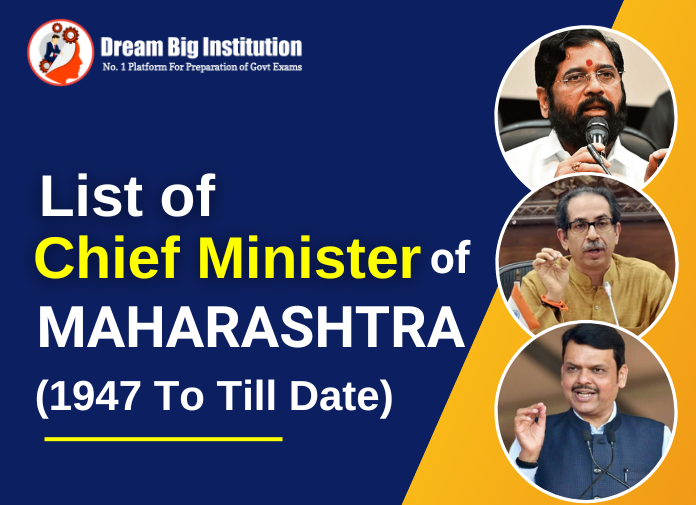
Currently, the Chief Minister of Maharashtra is Eknath Shinde, who is at the helm of the state’s affairs. As the current Chief Minister, he holds the responsibility of leading Maharashtra’s government and addressing the needs and aspirations of its people.
Maharashtra CM 2024

On June 30, 2022, Eknath Shinde was sworn in as the Chief Minister of Maharashtra, succeeding Uddhav Thackeray. Since assuming office, he has been actively serving as the state’s Chief Minister. Eknath Shinde is affiliated with the Shiv Sena political party and had previously held the position of Cabinet Minister in the Urban Development and Public Works departments before assuming the role of Chief Minister.

Prime Minister of Bombay (1937-1947)

Maharashtra was earlier known as Bombay State under British Rule and back then, Bombay State had Prime Minister as their executive head. In the following table, the candidates will find the list of Prime Ministers of Bombay State from 1937 to 1947.

Prime Minister of Bombay (1937- 1947)
NameTerm of OfficeAssembly
Took officeLeft office
Sir Dhanjishah Bomanjee Cooper1st April 193719th July 19371st Provincial Assembly (1937 Elections)
Balasaheb Gangadhar Kher19th July 19372nd November 1939
Vacant (Governor’s Rule)2nd November 193930th March 1946Dissolved
Balasaheb Gangadhar Kher30th March 194615th August 19472nd Provincial Assembly (1946 Elections)

Chief Ministers of Bombay State (1947-60)

After India attained Independence, the executive head of the Bombay State was designated as the Chief Minister of the state. In the following table, the candidates will find the list of Chief Ministers of Bombay State from 1947 to 1956.

Chief Ministers of Bombay State (1947 to 1956)
NameTerm of OfficeAssembly
Balasaheb Gangadhar Kher15th August 194721st April 1952Provincial Assembly (1946 election)
Morarji Ranchhodji Desai21st April 195231st October 19561st (1952 elections)
Chief Ministers of Bombay State (195 to 1960) (States Reorganisation Act, 1956)
Yashwantrao Balwantrao Chavan1st November 19565th April 19571st (1952 elections)
Yashwantrao Balwantrao Chavan5th April 195730th April 19602nd (1957 elections)

Chief Ministers of Maharashtra 2024

Under the Bombay Reorganisation Act of 1960, Bombay State was divided into states Maharashtra and Gujrat. In the following table, candidates will find the List of Chief Ministers of Maharashtra from 1960 to 2024.

Chief Ministers of Maharashtra List

Chief Ministers of Maharashtra List is as follows:

Chief Ministers of Maharashtra List
Chief MinisterTenureParty
Yashwantrao Chavan1960 – 1962INC (Indian National Congress)
Marotrao Kannamwar1962 – 1963INC (Indian National Congress)
Vasantrao Naik1963 – 1975INC (Indian National Congress)
Shankarrao Chavan1975 – 1977INC (Indian National Congress)
Vasantdada Patil1977 – 1978INC (Indian National Congress)
Sharad Pawar1978 – 1980INC (Indian National Congress)
A. R. Antulay1980 – 1982INC (Indian National Congress)
Babasaheb Bhosale1982 – 1983INC (Indian National Congress)
Vasantdada Patil1983 – 1985INC (Indian National Congress)
Shivajirao Patil Nilangekar1985 – 1986INC (Indian National Congress)
Shankarrao Chavan1986 – 1988INC (Indian National Congress)
Sudhakarrao Naik1988 – 1991INC (Indian National Congress)
Sharad Pawar1991 – 1993INC (Indian National Congress)
Manohar Joshi1995 – 1999BJP (Bharatiya Janata Party)
Narayan Rane1999 – 1999INC (Indian National Congress)
Vilasrao Deshmukh1999 – 2003INC (Indian National Congress)
Sushilkumar Shinde2003 – 2004INC (Indian National Congress)
Vilasrao Deshmukh2004 – 2008INC (Indian National Congress)
Ashok Chavan2008 – 2010INC (Indian National Congress)
Prithviraj Chavan2010 – 2014INC (Indian National Congress)
Devendra Fadnavis2014 – 2019BJP (Bharatiya Janata Party)
Uddhav Thackeray2019 – 2022Shiv Sena
Eknath Shinde2022- PresentShiv Sena

Here is the list of the last five Chief Ministers of Maharashtra along with their details:

Uddhav Thackeray:

Uddhav Balasaheb Thackeray was the most recent Chief Minister of Maharashtra.
He assumed office after being elected as the president of the post-poll coalition Maharashtra Vikas Aghadi.
In a Pratunam Survey held in June 2021, he was recognized as the most popular Chief Minister among the 13 states.
Devendra Fadnavis:

Devendra Fadnavis served as the first Chief Minister of Maharashtra from the Bharatiya Janata Party (BJP).
His tenure lasted from October 31, 2014, to November 8, 2019.
Although he took a second oath on November 23, 2019, he resigned three days later due to the BJP’s lack of a majority.
Presently, he holds the position of opposition leader in the Maharashtra Legislative Assembly.
Prithviraj Chavan:

Prithviraj Chavan held the office of Chief Minister for a period of 3 years and 321 days, from November 11, 2010, to September 28, 2014.
He was associated with the Indian National Congress (INC) politically.
Prior to his entry into politics, Chavan worked in the United States and later became an entrepreneur in India in 1974.
He also served as a member of the Rajya Sabha.
Ashok Chavan:

Ashok Chavan is a prominent leader of the Indian National Congress.
He served as the Chief Minister of Maharashtra from December 8, 2008, to November 9, 2010.
Chavan previously held various ministerial positions such as Minister for Cultural Affairs, Industries, Mines, and Protocol in the Vilasrao Deshmukh government.
Currently, he is serving as the Minister of Public Works (Excluding Public Undertakings) in the Government of Maharashtra


Vilasrao Deshmukh:

Vilasrao Deshmukh was the 14th Chief Minister of Maharashtra.
He held office for two terms, from October 18, 1999, to January 16, 2003, and again from November 1, 2004, to December 5, 2008.
Following his tenure as Chief Minister, Deshmukh became a member of the Rajya Sabha and later served as the Minister of Science and Technology and Earth Sciences.

FAQ on Chief Ministers Of Maharashtra

Q: Who was the first Chief Minister of Maharashtra?

A: The first Chief Minister of Maharashtra was Yashwantrao Chavan. He also served as the last Chief Minister of Bombay State.

Q: Who is the current Chief Minister of Maharashtra?

A: Eknath Shinde is the new Maharashtra CM who took charge of the office on 30 June 2022. He is politically associated with Shiv Sena. He previously worked in the cabinet of the last chief minister of Maharashtra, Uddhav Thackeray, as a minister for Urban Development and Public Works.

Q: Who is the longest-serving Maharashtra CM?

Vasantrao Naik is the longest-serving Maharashtra CM, who served the CMO for 11 years 77 days. Naik began his tenure as chief minister of Maharashtra on 5 December 1963 and ended his term on 21 February 1975. He was politically associated with the Indian National Congress.

Q: Who is the youngest Maharashtra CM?

Sharad Pawar was the youngest Maharashtra CM at age 38. He served two terms as the chief minister of Maharashtra, the first one associated with the INC (Socialist), from 18 July 1978 to 17 February 1980. The other term that Sharad Pawar served as Maharashtra CM was with INC from 26 June 1988 to 25 June 1991.

Q: Where can I find the list of chief ministers of Maharashtra from 1960 to 2024?

Find the list of Maharashtra CM from 1960 to 2024 shared here. We have shared the names of all the previous chief ministers of Maharashtra, details of their political associations, and total tenure here. Check out the list of CM of Maharashtra here.

500 Competitive Exams Covered 45000 Test Series Daily Free Quizzes Current Affairs Previous Year P

List of Karnataka Chief Ministers 1947 to 2024 Latest Updates

0

Karnataka Chief Minister 2024

Chief Ministers of Karnataka have been important in shaping how the state grows and changes. Karnataka used to be called Mysore State before it became Karnataka in 1956. Since then, different leaders have taken charge as Chief Minister, each leaving their mark on the state’s progress. Starting from K. Chengalaraya Reddy, who was the first Chief Minister after India got independence, to leaders like Siddaramaiah today, they’ve all faced different challenges and made decisions that affected things like schools, farms, roads, and programs to help people.

List of Chief Ministers of Karnataka 

Karnataka used to be called Mysore State until 1956 when it became Karnataka because of a law called the States Reorganisation Act. K. Chengalaraya Reddy was the first Chief Minister after India became independent, and he served from 1947 to 1952.

List of chief ministers of Karnataka 1947 to 2023

Check below the list of all CM of Karnataka for the period 1947-2023:

SL. NoName of CMPeriodParty
1.Sri K. Chengalaraya Reddy25 October 1947 to 30 March 1952Indian National Congress
2.K. Hanumanthaiah30 March 1952 to 19 August 1956Indian National Congress
3.Kadidal Manjappa19 August 1956 to 31 October 1956Indian National Congress
4.C. M. Poonacha27 March 1952 to 31 October 1956Indian National Congress
5.S. Nijalingappa1 November 1956 to 16 May 1958Indian National Congress
6.B. D. Jatti16 May 1958 to 9 March 1962Indian National Congress
7.S. R. Kanthi14 March 1962 to 20 June 1962Indian National Congress
8.S. Nijalingappa21 June 1962 to 28 May 1968Indian National Congress
9.Veerendra Patil29 May 1968 to 18 March 1971Indian National Congress (O)
10.D. Devaraj Urs20 March 1972 to 31 December 1977 28 February 1978 to 7 January 1980Indian National Congress
11.R. Gundu Rao12 January 1980 to 6 January 1983Indian National Congress
12.Ramakrishna Hegde10 January 1983 to 29 December 1984 8 March 1985 to 13 February 198616 February 1986 to 10 August 1988Janata Party
13.S. R. Bommai13 August 1988 to 21 April 1989Janata Party
14.Veerendra Patil30 November 1989 to 10 October 1990Indian National Congress
15.S. Bangarappa17 October 1990 to 19 November 1992Indian National Congress
16.M. Veerappa Moily19 November 1992 to 11 December 1994Indian National Congress
17.H. D. Deve Gowda11 December 1994 to 31 May 1996Janata Dal
18.J. H. Patel31 May 1996 to 7 October 1999Janata Dal
19.S. M. Krishna11 October 1999 to 28 May 2004Indian National Congress
20.Dharam Singh28 May 2004 to 2 February 2006Indian National Congress
21.H. D. Kumaraswamy3 February 2006 to 8 October 2007Janata Dal (Secular)
22.B. S. Yediyurappa12 November 2007 to 19 November 2007 30 May 2008 to 4 August 2011Bharatiya Janata Party
23.D. V. Sadananda Gowda5 August 2011 to 11 July 2012Bharatiya Janata Party
24.Jagadish Shettar12 July 2012 to 12 May 2013Bharatiya Janata Party
25.Siddaramaiah13 May 2013 to 15 May 2018Indian National Congress
26.B. S. Yediyurappa17 May 2018 to 23 May 2018Bharatiya Janata Party
27.H. D. Kumaraswamy23 May 2018 to 23 July 2019Janata Dal (Secular)
28.B. S. Yediyurappa26 July 2019 to 28 July 2021Bharatiya Janata Party
29Basavaraj Bommai28 July 2021 to 15 May 2023Bharatiya Janata Party
30Siddaramaiah20 May 2023 to IncumbentIndian National Congress

*We have prepared the table of Chief Ministers of Karnataka with utmost care. If we have committed certain mistakes then let us know through the comment box below. We’ll verify and update it no time.

Election Process of Chief Ministers of Karnataka

  • The election of the Chief Minister in Karnataka is based on a parliamentary system.
  • The leader of the majority party in the Karnataka Legislative Assembly is invited by the Governor to form the government.
  • The leader is chosen through internal party processes or selection mechanisms established by the political party.
  • After general elections, members of the Legislative Assembly vote for the leader of their respective parties.
  • The party with the majority of seats forms the government, and its leader becomes the Chief Minister.
  • In cases of no clear majority, alliances or coalitions may be formed to establish a majority.
  • The leader of the coalition with the majority is invited to take office as the Chief Minister.
  • The Chief Minister is sworn in by the Governor, formally assuming office.
  • The Chief Minister remains in power as long as they maintain the confidence of the majority in the Legislative Assembly.
  • A vote of no confidence or failure to pass crucial legislation may lead to resignation or a call for fresh elections

List of Chief Ministers of Karnataka Important Facts

  • B.S. Yediyurappa: He holds the record for the shortest tenure as Chief Minister in 2018, serving for only 2.5 days.
  • D. Devaraj Urs: He served as the Chief Minister for nearly seven years in the 1970s, making him the longest-serving CM in Karnataka’s history.
  • Ramakrishna Hegde: He holds the distinction of serving the most number of terms, which were three, and these terms were not consecutive.
  • Veerendra Patil: He had the largest gap between his two terms as Chief Minister, spanning about 17 years.
  • B. D. Jatti: In addition to his role as Chief Minister, he also served as the fifth Vice President of India.
  • H. D. Deve Gowda: He deliberately shortened his term as Chief Minister (1994–1996) to become India’s Prime Minister

FAQs

Q.Who was the first Karnataka Chief Minister after independence?

Ans: K. Chengalaraya Reddy served as Karnataka Chief Minister from 25 October 1947 to 30 March 1952

Q. Who was the first Karnataka Chief Minister after Karnataka Attained started and was renamed?

Ans:D. Devaraj Urs served as Karnataka Chief Minister from 20 March 1972 to 31 December 1977 and played a significant role in renaming the state from Mysore to Karnataka.

Q. Which Karnataka Chief Minister became Prime Minister of India?

Ans: H. D. Deve Gowda is the only Karnataka Chief Minister who became Prime Minister of India. He serves from 11 December 1994 to 31 May 1996 as Karnataka Chief Minister.

Q.Who is the current Chief Minister of Karnataka?

Ans. The current Chief Minister of Karnataka is Siddaramaiah.

500 Competitive Exams Covered 45000 Test Series Daily Free Quizzes Current Affairs Previous Year P

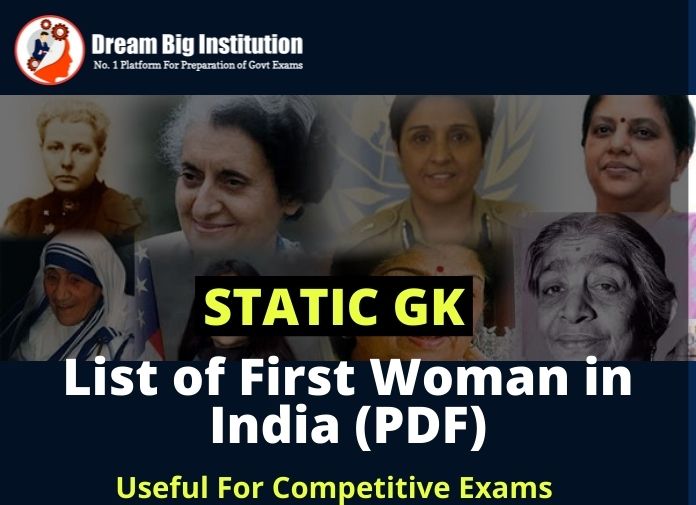
List of First Women in India PDF For Competitive Exams 2024

0

List of First Women in India GK

We Will Cover All The Chapters of Static Gk Which is Important for the Upcoming Exam. If you want to strengthen your Static GK section then Practise our UNLOCK Series thoroughly. here we are provided a list of First Women in India

List of First Women in India

List of First Women in India PDF
Female PersonalityYearRole
Nirmala Sitharaman2019India’s First full-time woman Finance Minister
GS Lakshmi2019First ever woman to be appointed to the ICC International Panel of Match Referees
Vrinda Rathi 2019First female national umpire to officiate in the T20 contest.
Arohi Pandit2019First Indian woman to cross the Atlantic Ocean solo in a light sport aircraft
Nirmala Sitharaman2019India’s First woman Defence Minister
Gagandeep Kang2019First Indian woman to be elected Royal Society Fellow
Hina Jaiswal2019 First Indian Woman Flight Engineer.
Divya Karnad2019First Indian woman to receive Future of Nature award for marine conservation.
Harmanpreet Kaur2019 First women cricketer scored a century in T20 
Captain Divya Ajith2019First female officer to lead a contingent on the Army Day parade
Lieutenant Bhavana Kasturi 2019First female to lead the Indian Army’s Service Corps (ASC) contingent, comprising 144 male personnel
Captain Shikha Surabhi2019 First female to lead the Army’s Daredevils Motorcycle Display team for the first time, comprising 33 men
Aditi Ashok2019 First Indian female golfer to win the Ladies European Tour 
Diksha Dagar2019Youngest Indian woman to win on the Ladies European Tour (LET).
Arunima Sinha2019First female amputee to climb Mount Vinson, the highest peak of Antarctica.
Hima Das2018First Indian woman athlete to win a gold at the world level in the women’s 400m final race in the IAAF World Under-20 Athletics Championships 
Rahi Sarnobat2018First Indian woman to win a shooting gold in the Asian Games 
Savitribai Phule1848 Savitribai Phule became the first woman teacher in India.
Annie Besant1917First female president of the Indian National Congress.
Pandita Ramabai1919First Indian woman to be awarded the Kaiser-i-Hind Medal by the British Raj.
Sarojini Naidu1925First Indian born female president of the Indian National Congress.
Sarla Thakral1936the first Indian woman to fly an aircraft
Asima Chatterjee1944First Indian woman to be conferred the Doctorate of Science by an Indian university.
Amrit Kaur1947First female Cabinet minister of India in the country’s first cabinet.
Anandibai Gopalrao Joshi1887the first Indian female physician
Shila Dawre1988country’s first woman autorickshaw driver when she first stepped into the ‘male-dominated’ zone
Reita Faria Powel1966Reita Faria Powel is an Indian model, doctor and beauty queen, who won Miss World also the first Asian woman to win the title
Arati Saha1959the first Indian and Asian woman to swim across English Channel. She also became the first female sportsperson to be awarded Padma Shri in 1960.
Mother Teresa1979the first Indian woman to win the Nobel Peace Prize
Indira Gandhi1966the first woman Prime Minister of India and served from 1966 to 1977. In 1971, she became the first woman to receive the Bharat Ratna award.
Pratibha Patil2007-2012the first woman President of India and held office from July 2007 to July 2012.
Kalpana Chawla1997the first Indian woman who reached in space. As a mission specialist and a primary robotic arm operator, she went into space in 1997.
Kiran Bedi1972Kiran Bedi became the first woman officer in India. Moreover, later in 2003, Kiran Bedi also became the first woman who was appointed as the United Nations Civil Police adviser.
Anjali Gupt2001Anjali Gupta is the first female flying officer in the Indian Air Force to be court-martialled
Vijaya Lakshmi Pandit1953the first woman (and first Indian) president of the United Nations General Assembly
Anna Chandy1959the first Indian woman judge of a High Court (Kerala High Court)
Sucheta Kriplani1963the Chief Minister of Uttar Pradesh, the first woman to hold that position in any Indian state
Kamaladevi Chattopadhyay1966Ramon Magsaysay award for community leadership
Kamaljit Sandhu1970the first Indian woman to win a Gold in the Asian Games
Bachendri Pal1984Bachendri Pal became the first Indian woman to climb Mount Everest.
Surekha Yadav1986the first Asian woman loco-pilot or railway driver.
Justice M. Fathima Beevi1989the first woman judge of the Supreme Court of India
Priya Jhingan1992the first lady cadet to join the Indian Army (later commissioned on 6 March 1993
Meira Kumar4 June 2009the first female Speaker of Lok Sabha.
Priyanka N.20 October 2011drove the inaugural train of the Namma Metro becoming the first female Indian metro pilot.
Mitali Madhumita2011the first woman officer to win a Sena Medal for gallantry.
Tanushree Pareek25 March 2017the first female combat officer commissioned by the Border Security Force
Sania Mirza2005the first ever Indian woman to win the Women’s Tennis Association (WTA) title in 2005.
Saina Nehwal 2012-2015Saina Nehwal becamethe first Indian women to win a medal in Badminton at 2012 Olympic Games. Later in 2015, she became the first Indian woman to secure no. 1 position in world rankings.
Mary Kom2002,2005,2006,2008
2010
5-time World Amateur Boxing Champion. she is the only Indian woman boxer to have qualified for the 2012 Summer Olympics
Deepa Malik2016First medal and that’s Silver won by her in Paralympics games in Summer Paralympics 2016.
Sushmita Sen1994The First Miss Universe
Tashi and Nancy Malik2013First twins ever to conquer Mount Everest together
Dr. Neeru Chadha2017First Indian Woman to be Elected as Judge of the International Tribunal for the Law of the Sea (ITLOS)
Premlata Aggarwal2008-2013First Indian Woman Mountaineer to Scale the Seven Continental Peaks
Nita Ambani2016First Indian Woman Who Become an Individual Member of International Olympic Committee
Mahel Musa1977First Indian Woman Who Reached Antarctica
Ashapurna Devi1976First Woman to Receive jnanpith Award
Neerja Bhanot1987First Woman to Receive Ashoka Chakra
Razia Sultan1236 to 1240First & Last Muslim Woman Ruler of Delhi
Sushma Chawla2005First Woman chairperson of Indian Airlines
P. Bandopadhyaya1978First Woman Air Vice Marshal
Puneeta Arora2005First Woman Lieutenant General
Miss C.B. Muthumma1970The first woman Ambassador
Santosh Yadav1993First woman to climb Mount Everest twice
Mrs. Leela Seth1991First woman chief justice of a high Court
Harita Kaur Deol1994First woman Pilot in Indian Air Force
Roze Millian BethewFirst woman chairman of Union Public Service Commission
Kanchan Chaudhary BhattacharyaFirst woman Director General of Police (DGP)

List of First Women in India PDF For All Competitive Exams

FAQ

Q. Who is the first female doctor in India?

Ans: The first female doctor in India was Dr Anandibai Gopalrao Joshi.

Q. Who is the first female engineer in India?

Ans: The first female engineer in India was Lalitha Ayyalasomayajula.

Q. Who was the first female pilot in India?

Ans: The first female pilot in India was Sarla Thukral.

Q. Who is the first female IAS officer in India?

Ans: The first female IAS officer in India was Anna Rajam Malhotra.

500 Competitive Exams Covered 45000 Test Series Daily Free Quizzes Current Affairs Previous Year P

Karnataka TET Previous Question Papers PDF with Answer (Paper 1, 2)

0

Karnataka TET Previous Question Papers PDF Download (Paper 1, 2): Candidates who have applied for the Karnataka Teachers Eligibility Test (KARTET) will likely be seeking the KARTET Model Papers. The School of Education Board has released Karnataka TET Model Question Papers on their official website. To access the KARTET Old Papers from this site, navigate to the bottom of the page. Aspirants can utilize KARTET Paper 1 and 2 Previous Question Papers to practice for the exam and achieve higher scores. Those interested in downloading KARTET Previous Papers can find convenient access to the PDFs provided here

Karnataka TET Previous Question Papers PDF

Practicing with multiple Karnataka TET Previous Question Papers contributes to a better understanding of the types of questions presented in the exam. We have provided Karnataka TET Previous Question Papers for both Paper 1 and Paper 2, which can be downloaded through the links provided in the table below. Engaging with KARTET Old Papers is essential to familiarize yourself with the questions and their solutions that are commonly encountered in the exam. Consistently reviewing past exam questions offers candidates a deeper understanding of the test. Therefore, to boost your confidence and readiness for the exam, it’s recommended to practice more KARTET Model Question Papers. Moreover, by referring to KARTET Previous Papers, you can also enhance your proficiency in solving problems efficiently.

KARTET Previous Year Question Papers Overview

Candidates willing to work as Primary or Upper Primary Teachers can apply for the KARTET 2024 Examination. Go through the table below to get a quick overview of the Karnataka TET 2024 Exam. 

KARTET Previous Year Question Papers Overview
Conducting AuthoritySchool Education Department, Karnataka
Exam NameKARTET 2024, Karnataka TET, Karnataka TET 2024
KARTET 2024 Notification Released OnWill Be Out Soon in 2024
Exam CategoryEntrance
Examination ModeOffline
Application ModeOnline
Educational QualificationCategory 1: Candidate must have qualified for class 12 from a recognized board
Category 2: Candidate must have completed Graduation from a recognized university
Official Siteschooleducation.karnataka.gov.in

KARTET Model Question Papers

Applied aspirants for the Karnataka Teachers Eligibility Test (KARTET) can get the official links to download the KAR TET Model Question Papers from here. By referring to the KAR TET Model Question Papers, candidates can have a basic idea about which type of questions are asked, as well as the topics asked in the exam. Downloading the KAR TET Model Question Papers and practicing them helps the aspirants to grab more focus on the exam.

Karnataka TET Previous Question Papers – Download Links

Karnataka TET Previous Question Papers  – Important Links
Karnataka TET Previous PaperDownload Previous Paper
Karnataka TET Paper 1 Previous Question PaperDownload Previous Paper
Karnataka TET Paper 2 Previous Question PaperDownload Previous Paper
KAR TET Previous Question PaperDownload Previous Paper
KAR TET Paper 1 Previous Question Paper Download Previous Paper
KAR TET Paper 2 Previous Question Paper Download Previous Paper
KAR TET Previous Paper Download Previous Paper

KARTET Exam Pattern 2024

According to the KARTET Exam Pattern 2024, the examination will be held in offline mode. The KARTET Paper 1 and Paper 2 will be held separately for the candidates across the state. Here are the key highlights of the KARTET 2024 Exam Pattern. 

  • The Karnataka TET 2024 Exam will be held in the offline mode
  • Candidates have to attempt the exam in the pen and paper mode
  • There will be no negative marking for the wrong answers marked in the examination

KARTET Paper I Exam Pattern

SectionsTotal QuestionsTotal Marks
Child development and pedagogy3030
Language 13030
Language 23030
Mathematics3030
Environmental science (paper 1)3030
Social Studies (For Physically Disabled)3030

KARTET Paper II Exam Pattern

SectionsTotal QuestionsTotal Marks
Child development and pedagogy3030
Language 13030
Language 23030
Mathematics3030
Science or social science (paper 2)3030

FAQs

Where can I download the KARTET Previous Year Question Papers?

Candidates can download the KARTET Previous Year Question Paper from the official website of the School Education Department, Karnataka.

What is the benefit of using the KARTET Question Paper?

Candidates should use the KARTET Question Paper to know the difficulty level of the questions asked in the examination.

How should I use the KARTET Previous Year Question Paper?

Candidates should attempt the KARTET Previous Year Paper regularly to understand the level of their preparations.

500 Competitive Exams Covered 45000 Test Series Daily Free Quizzes Current Affairs Previous Year P

Supreme Court Junior Assistant Previous Paper PDF Free Download

0

Hello Dear Aspirants,

Supreme Court Junior Assistant Previous paper pdf: The best way to check your preparation level is to solve the previous year’s paper. Supreme Court of India Junior Court Assistant exam is one of the exams which requires good knowledge in the English section as in the prelims exam the General English is having a weightage of 50 marks out of a total of 125 marks. In order to perform well in the examination, it is necessary to have a proper understanding of the exam pattern as well as the syllabus.

To succeed in the Junior Court Assistant exam, it’s important to practice regularly and review the most important subjects. One effective way to practice is by using previous year’s papers. These papers can help you analyze your strengths and weaknesses, and improve your preparation accordingly. It’s a good idea to have an understanding of what might be asked in the exam to build a solid strategy. You can enhance your exam preparation by downloading the Supreme Court Junior Assistant Previous Paper PDF

Supreme Court Junior Assistant Previous paper pdf (Highlight)

DescriptionDetails
Article NameSupreme Court Junior Assistant Previous paper pdf
Organization NameSupreme Court of India
CoversPrevious Papers PDF, Exam Pattern
Post NameSupreme Court Junior Assistant
Selection Process      Online Examination
CategoryPrevious Year Paper
LanguageEnglish and Hindi
FormatPDF
QualityBest

Supreme Court Of India Junior Court Assistant Previous Year Paper 2022

Candidates who applied for the Supreme Court of India Junior Court Assistant post must go through the Supreme Court Of India Junior Court Assistant Previous Year Paper so that they get to know the kind of questions asked in the exam and the difficulty level of the questions. Candidates can download the Supreme Court Of India Junior Court Assistant Previous Year Paper in PDF format and check the pattern and difficulty level of the exam.

Supreme Court Of India Junior Court Assistant Previous Year PaperDownload PDF

Supreme Court Of India Junior Court Assistant: Exam Pattern 2023

In the preliminary examination of SCI Junior Court Assistant, a total number of 125 questions will be asked having a weightage of 125 marks. There will be 4 sections which are General English, General Aptitude, Computer as well as general knowledge.

SCI Junior Court Assistant  Exam pattern
SubjectQuestionsMarks
General English5050
General Aptitude2525
General Knowledge (GK)2525
Computer2525
Total125125

Advantages of Practicing Supreme Court Junior Assistant Previous paper PDF

Adequate preparation along with Supreme Court Junior Assistant previous papers pdf materials practice will mold your skills before the online written examination. Improve your speed, accuracy, and time management skills by practicing these previous year’s papers of Supreme Court Junior Assistant recruitment. Review the detailed solutions provided by our experts.

  1. Solving Practicing the previous question papers of the Supreme Court Junior Assistant exam is beneficial as it allows you to gain a better understanding of the exam. By solving these papers, you can analyze the types of questions that are asked and assess the level of difficulty in the examination. This process helps you become familiar with the exam format and prepares you for what to expect on the actual test day. Understanding the question patterns and difficulty level can aid in formulating effective study strategies and focusing on relevant topics. Overall, solving previous question papers enhances your exam preparation and increases your chances of performing well..
  2. By understanding the weightage of topics, candidates can gain insights into the actual scoring pattern of the Supreme Court Junior Assistant exam. It helps them identify which topics carry more importance and are likely to have a greater number of questions. This knowledge enables candidates to prioritize their preparation accordingly. By allocating more time and effort to high-weightage topics, candidates can maximize their chances of scoring well in the exam. Understanding the scoring pattern helps candidates strategize their study plan and focus on areas that can yield higher marks. It is an effective approach to ensure efficient and targeted preparation for the exam.
  3. By practicing Supreme Court Junior Assistant previous year paper pdf, candidates can self-assess their performance.
  4. Candidates can learn time management skills by practicing more Supreme Court Junior Assistant exam previous year question papers as only composite timing is there.
  5. As Supreme Court Junior Assistant previous papers with solutions along with detailed explanations by our expert team are provided here which helps you to understand the concepts better.
  6. It boosts your confidence.

Do download and practice these Supreme Court Junior Assistant previous year question paper pdf materials and crack the examination.

FAQ on Supreme Court Junior Assistant Previous paper PDF

Q.1 How will this Supreme Court of India junior assistant previous year paper will be helpful?

Ans: The supreme court of India junior assistant previous year paper will give you an idea about the kind of questions asked and the difficulty level. After going through this previous year paper candidates can plan their preparation in an efficient manner by giving priority to the topics which are asked in the previous exam

Q.2 How can I download the Supreme Court of India Junior Court Assistant previous year paper?

Ans: You can download the previous year paper by clicking on the download link given above article.

500 Competitive Exams Covered 45000 Test Series Daily Free Quizzes Current Affairs Previous Year P

IBPS PO Salary 2024, Revised Salary Structure, Job Profile And Allowances

0

IBPS PO Salary 2023: IBPS offers lucrative salaries to their Probationary Officers which is the main reason that every year graduates rush for grabbing this job opportunity. Many of the banking aspirants are confused about the bank providing salary as per the 7th pay commission. However, the bank follows a bipartite settlement for revising the IBPS PO Salary. In this article, we have discussed the salary and everything a bank aspirant looks forward to before joining as a Probationary Officer in 11 participating banks of IBPS.

IBPS PO Salary 2024

According to the latest settlement, employees will get a 15% hike in the payslip component. This has to be followed by public sector banks till the time a new settlement is released. Check the below-tabulated statistics for the updated IBPS PO Salary 2024 compensation structure as per the 11th Bipartite Agreement, which was announced in November 2020.

IBPS Bank PO Salary Structure in India
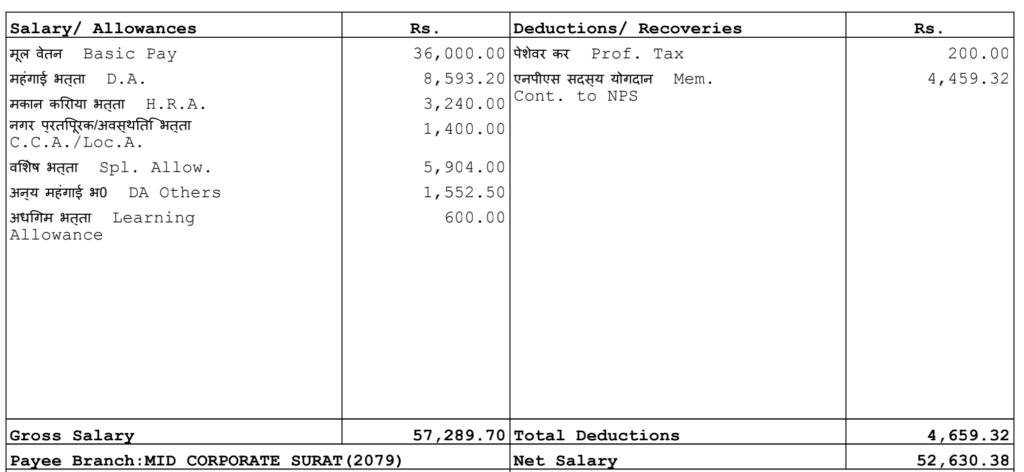
Basic payINR 36,000
DA23.87% of the Basic Pay (Varies based on inflation rates) (INR 8593 for basic pay of INR 36,000)
HRA7%-9% of the basic pay (For Eg: 3240 for the basic pay of INR 36,000)
City Compensatory Allowance (CCA)/LOC A3% or 4%(depending on the place of posting) (For Eg: INR 1400)
Special Allowance7.75% of the basic pay (INR 5904 for the basic pay of INR 36,000)
DA othersRs. 1552
Learning AllowanceRs. 600
Prof TaxRs. 200
Cont to NPSRs. 4459
Gross SalaryRs. 57,289
NET Salary after deduction of INR 4659Rs. 52,630

IBPS PO Salary In-hand

When you get hired as an IBPS Probationary Officer, your starting IBPS PO Salary 2024 package is between Rs. 52,000 to 55,000. This includes various components like dearness allowances, special allowances, house rent allowance (HRA), and other additional benefits. Your gross salary before any deductions is around Rs. 57,000. After taking out the necessary deductions, your actual in-hand salary will be around Rs. 52,000 to 55,000, which is the amount you’ll receive in your bank account.

IBPS PO Salary 2024 in India after the Bipartite Settlement

The salaries of bank employees have been increased through a process called “wage revision.” This revision was approved and became effective in November 2017 under an agreement called the “11th bipartite settlement.” The revised salary structure will be in place for a period of five years until 2024 or until it is revised again by IBPS (Institute of Banking Personnel Selection).

Around 8.8 lakh bank employees have benefited from this approval of the 11th bipartite settlement, which means they will receive higher salaries during this period. Additionally, there is a provision for regular increments in the pay of IBPS Probationary Officers, ensuring their salaries increase over time.

IBPS PO Salary 2024 Perks & Allowances

Check the below table for quick overview of IBPS PO Salary 2024 Perks & Allowances:

IBPS PO Allowances
IBPS PO Basic PayRs 36,000/- ( Increment in 4 stages)
House Rent Allowances7%-9% of the basic pay
Dearness Allowance23.87% of the Basic Pay (Varies based on inflation rates)
City Compensatory Allowance (CCA)3% or 4%(depending on the place of posting)
Special Allowance7.75% of the basic pay

IBPS PO House Rent Allowance (HRA): The HRA is a part of the IBPS PO Salary 2024 that varies depending on the city where the PO is posted. It can be 9.0%, 8.0%, or 7.0% of the basic salary, depending on whether it’s a metro city, a big city, or another location.

IBPS PO Dearness Allowance (DA): DA is an allowance given as a percentage of the basic salary. It is revised every three months based on the inflation rate, which is measured by the All India Consumer Price Index Data published by the Government of India.

IBPS PO Special Allowance (SA): Approximately 7.75% of the base pay is made up by this allowance, which was increased during the most recent wage adjustment. It became active in November 2017.

IBPS PO City Compensatory Allowance (CCA): CCA varies based on the type of city. It can be 0%, 3%, or 4% of the basic salary.

In addition to these allowances, an IBPS PO also enjoys other benefits like Learning Allowance, Travelling Allowance, Newspaper Reimbursement, Medical Aid, and benefits under the New Pension Scheme. When we add all these together, the total IBPS PO Salary 2024 may amount to around Rs. 52,000 or more.

IBPS PO Promotion Policy

The majority of public sector banks follow uniform guidelines supplied by the Ministry of Finance, Government of India, when it comes to promotion policy. Public sector banks have two alternatives for promotions: the standard channel and the merit channel. The following link will take you to the whole details:

Promotional Channels for PO in Public Sector Banks

An IBPS PO’s Professional Development Officer JMGS I (Junior Management Grade Scale I) or probationary officers in banks earn between Rs. 52,000 and Rs. 55,000.

For other Scale officers:

  • MMGS II (Middle Management Grade Scale II)
  • MMGS II (Middle Management Grade Scale III)
  • SMGS IV (Senior Management Grade Scale IV)
  • SMGS V (Senior Management Grade Scale V)

IBPS PO Salary 2024 Job Profile

Probationary Officer in the banking sector has a good reputation and is the most wanted position among graduates. Many banking aspirants are curious about the functions and responsibilities of the PO employee. We have defined the work profile, responsibilities, and tasks that a Probationary Officer must handle after being selected in this section.

  1. During their probation period, newly selected candidates undergo training to handle various day-to-day banking tasks like finance, accounting, billing, investments, and revenue collection.
  2. A PO is responsible for assisting and resolving customer queries.
  3. The PO is in charge of overseeing and managing activities at their assigned branch.
  4. As a PO, they need to identify and explore new business opportunities for the branch.
  5. POs handle the supervision of daily transactions and loan-related activities.
  6. Maintaining good public relations with customers is a crucial part of their role, and they also need to report customer issues and grievances to higher bank authorities.

This sums up the key responsibilities of a Probationary Officer in the banking sector.

IBPS PO Salary Slip 2023

Here, we are providing you with the details of the IBPS PO Salary Slip. You can go through this Pay slip for your reference to get an idea about the salary which is credited in the account of an IBPS Probationary Officer (PO).

ibps po salary slip

IBPS PO Career Growth

The career growth offered to Probationary Officer is very attractive providing vast opportunities even after the aspirant grab the job. On the basis of their performances, experiences, and knowledge below are the options that follow after owning the post of IBPS PO. The candidate have to appear in exams conducted by IBPS time-to-time to grab the promotion.

1. Middle Manager – Middle Management Grade Scale 2 
2. Senior Manager – Middle Management Grade Scale 3 
3. Chief Manager – Senior Management Grade Scale 4 
4. Assistant General Manager – Senior Management Grade Scale 5 
5. Deputy General Manager – Top Management Grade Scale 6 
6. General Manager – Top Management Grade Scale 7 
7. Executive Director 
8. Chairman and Managing Director

Check IBPS PO Related Links

IBPS PO Notification 2023IBPS PO SyllabusIBPS PO Exam Date
IBPS PO Admit CardIBPS PO Cut-offsIBPS PO Study Material
IBPS PO Previous Year PapersIBPS PO SalaryIBPS PO Result

FAQs

Q1. What is the basic pay of IBPS PO?

Ans: Rs. 36,000 is the revised basic pay of Bank PO as applicable from November 2017.

Q2. Is Dearness Allowance revised under 11th Bipartite Agreement?

Ans: Yes, the dearness allowance has been reduced to 23.87%

Q3. What is the HRA provided to a IBPS PO?

Ans: It varies according to place of posting and can be 7% to 9% of the basic salary.

Q4.What is the revised in-hand salary of IBPS PO?

Ans: The in-hand salary has been revised to Rs. 52,000 to 55,000.

500 Competitive Exams Covered 45000 Test Series Daily Free Quizzes Current Affairs Previous Year P

SBI Clerk Mains Result 2024 Postponed, Check Latest Updated Here

0

SBI Clerk Mains Result 2024

The SBI Clerk Mains Exam is the second stage of the recruitment process for the position of Clerk (Junior Associate) in SBI. The SBI Clerk Mains Result 2024 will determine the outcome of the candidates who cleared the preliminary examination and appeared in the main examination. The main exam was held on 25 February and 04 March 2024.

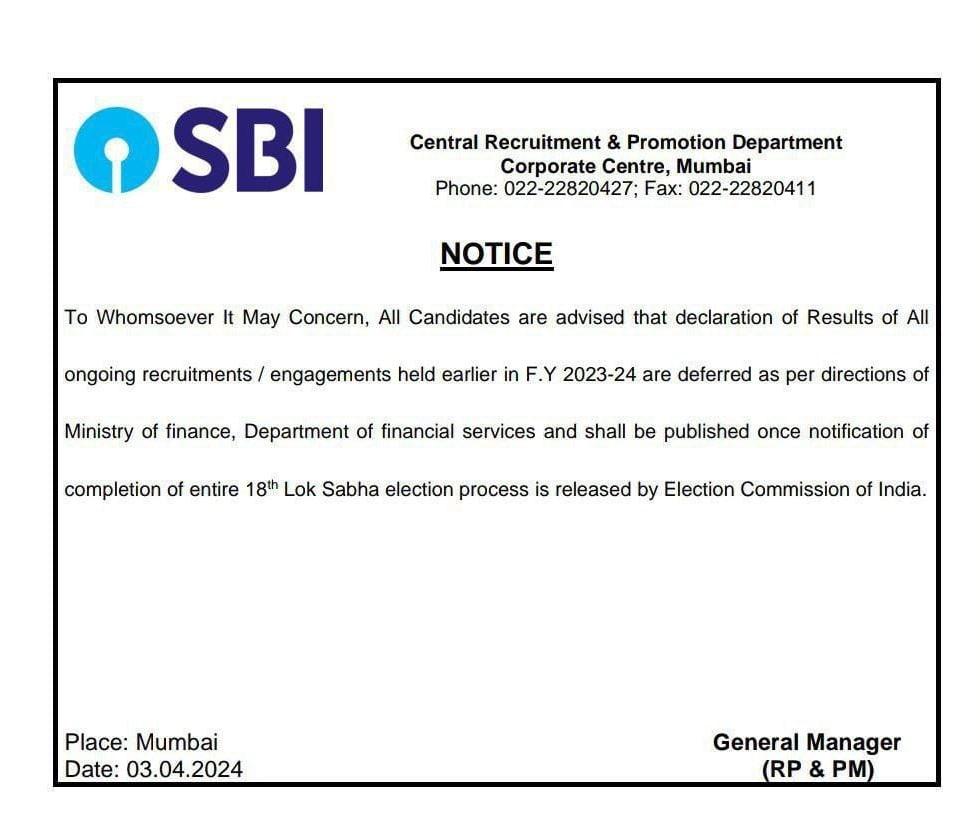
The release of the SBI Clerk Mains Result generates anticipation and excitement among the candidates eagerly waiting for the consequences of their months of preparation and hard work. However, due to the general election, the SBI Clerk Mains result has been postponed and it can be anticipated that the result shall be announced in June 2024 (after the conclusion of the General Elections).

SBI Clerk Final Result 2024

A large number of candidates qualified for the SBI Clerk Prelims Exam 2024 and participated in the main examination. Now these aspirants are waiting anxiously for the declaration of SBI Clerk Mains Result 2024, which has been postponed due to the 18th Lok Sabha Election. SBI Clerk Result 2024 for Mains will be published in PDF format comprising the roll numbers of shortlisted candidates, who have made the final selection. Here, we have provided the snippet of the notice made available on the official website of SBI, www.sbi.co.in.

SBI Clerk Mains Result 2024 Postponed, Check Latest Updated Here_3.1

SBI Clerk Result 2024: Summary

A summary of all the important points related to SBI Clerk Result 2024 has been discussed in the below table.

SBI Clerk Result 2024
OrganizationState Bank of India
Exam NameSBI Clerk Exam 2023-24
PostJunior Associates
Vacancy8773
CategoryResult
SBI Clerk Mains Result 2024To Be Released
Selection ProcessPrelims and Mains
Official Websitewww.sbi.co.in/careers

SBI Clerk Mains Result 2024 PDF Link

SBI Clerk Mains Result 2024 will be released in June and it will published in PDF format for the 8773 vacancies of Junior Associates. The shortlisted candidates will have to appear for the Language Proficiency Test (LPT) and then will be recruited in the various branches of the State Bank of India all across the nation. Aspirants need to bookmark the post to receive the latest updates along with the direct link to download the SBI Clerk Mains Result 2024 PDF.

SBI Clerk Mains Result 2024-Click Here to Download PDF [Inactive]

How to Check SBI Clerk Result 2024?

Aspirants have to follow the below-discussed steps to download the SBI Clerk Mains Result 2024.

Step 1:  Go to the official website of the State Bank of India (SBI), https://www.sbi.co.in/

Step 2: Look for the “Announcement” section on the homepage.

Step 3: Check for the latest notification regarding the SBI Clerk Recruitment 2023.

Step 4: Under the SBI Clerk Recruitment 2023, search for the SBI Clerk Mains Result Link.

Step 5: Click on the link and download the SBI Clerk Final Result 2024 PDF.

Step 6: Use the shortcut key, “Ctrl+F” to search your roll number in the SBI Clerk Mains Result 2024 PDF.

Details Mentioned on SBI Clerk Mains Result 2024

After downloading the SBI Clerk Result 2024 for Mains, candidates need to verify the information provided on it. The list of details mentioned on SBI Clerk Final Result 2024 is as follows:

  • Organization Name
  • Exam Name
  • Mains Exam Date
  • Roll Number of Qualified Candidates

SBI Clerk Mains Score Card 2024

After the announcement of the SBI Clerk Mains Result 2024, the State Bank of India will publish the scorecard and cut-off marks. Candidates who appeared for the main examination will be able to check the overall marks obtained. Aspirants will need the essential parameters provided at the time of the registration process to download their SBI Clerk Mains Score Card 2024. It is to notify candidates that SBI does not provide the marks obtained in each of the sections.

SBI Clerk Mains Cut Off 2024

SBI Clerk Mains Cut Off 2024 will be released state-wise and category-wise along with the scorecard on the official portal, www.sbi.co.in. Aspirants who score more than the minimum qualifying marks are eligible for the final selection. SBI publishes the overall cut-off marks for the candidates belonging to different categories.

SBI Clerk Mains Result 2024: Tie-Breaking Policy

State Bank of India has the Tie Breaking Policy which is utilized when two or more candidates score equal marks in the examination. The SBI Clerk 2024 Tie Breaking Policy has been discussed in brief below.

  • First preference will be given to candidates belonging to the categories of SC, ST, OBC, and PH.
  • The second preference will be for the aspirants who have fewer incorrect answers in all the subjects.
  • At last, the age factor will be considered and candidates older in age will be given preference.

FAQ

500 Competitive Exams Covered 45000 Test Series Daily Free Quizzes Current Affairs Previous Year P

Uttarakhand Cooperative Bank Recruitment 2024, Apply Online for 233 Posts

0

Hello Dear Aspirants,

Uttarakhand Cooperative Bank Recruitment 2024

Uttarakhand Cooperative Institutional Service Board has initiated the recruitment process to recruit 233 various vacant posts in Uttarakhand Cooperative Bank. Uttarakhand Cooperative Bank Recruitment 2024 aims to recruit clerks, junior branch managers, senior branch managers, assistant managers and managers across Uttrakhand. The ongoing registration process will close on 30 April 2024. Candidates can find more details on Uttarakhand Cooperative Bank Recruitment 2024 in this column.

Uttarakhand Cooperative Bank Recruitment 2024 Notification PDF

Uttarakhand Cooperative Bank Recruitment 2024 Notification PDF has been released by the Uttarakhand Cooperative Institutional Service Board Dehradun to recruit candidates for the various posts of Clerk, Junior Branch Manager, Senior Branch Manager, Assistant Manager, and Manager. The direct link to download the Uttarakhand Cooperative Bank Recruitment 2024 Notification PDF is given below.

Uttarakhand Cooperative Bank Recruitment 2024-Click Here to Download Notification PDF

Uttarakhand Cooperative Bank Recruitment 2024: Overview

The overview of the Uttarakhand Cooperative Bank Recruitment 2024 will give you a gist about this recruitment which is given below with the help of an official notification PDF.

Uttarakhand Cooperative Bank Recruitment 2024
OrganizationUttarakhand Cooperative Institutional Service Board
Exam NameUttarakhand Cooperative Bank
Conducting BodyIBPS
PostClerk, Junior Branch Manager, Senior Branch Manager, Assistant Manager and Manager
Vacancy233
CategoryRecruitment
Age LimitMinimum-21 YearsMaximum-42 Years
Educational QualificationVaries Post Wise
Application FeesSC/ST/PWD- Rs. 750All other categories- Rs. 1000
Selection ProcessOnline Examination
Official Websitewww.cooperative.uk.gov.in

Uttarakhand Cooperative Bank Recruitment 2024: Important Dates

Candidates can check all the important dates related to the Uttarakhand Cooperative Bank Recruitment 2024 below.

Uttarakhand Cooperative Bank Recruitment 2024: Important Dates
EventsDates
Uttarakhand Cooperative Bank Recruitment 2024 Notification14 March 2024
Uttarakhand Cooperative Bank Recruitment 2024 Apply Online Starts1 April 2024
Uttarakhand Cooperative Bank Recruitment 2024 Last Date to Apply30 April 2024
Last Date to Make Changes in Application Form7 May 2024

Uttarakhand Cooperative Bank Recruitment 2024: Apply Online

Uttarakhand Cooperative Bank Recruitment 2024 Apply Online link has been activated on 01 April 2024 for the eligible and interested candidates. For the ease of aspirants, we have provided the direct application online link for the Uttarakhand Cooperative Bank Recruitment 2024. To participate in the recruitment process the candidates have to fill out the application form till 30 April 2024.

Uttarakhand Cooperative Bank Recruitment 2024: Click Here to Apply Online

Uttarakhand Cooperative Bank Vacancy 2024

There is a total of 233 vacancies for the posts of Clerk, Junior Branch Manager, Senior Branch Manager, Assistant Manager and Manager given below. The highest number of vacancies is for the position of Clerk, i.e. 162, followed by for Junior Branch Manager, i.e. 54. Aspirants can check the below table Uttarakhand Cooperative Bank Vacancy 2024.

Uttarakhand Cooperative Bank Vacancy 2024
PostsNumber of Vacancies
Clerk162
Junior Branch Manager54
Senior Branch Manager9
Assistant Manager6
Manager2
Total233

Uttarakhand Cooperative Bank Eligibility Criteria

Candidates who are interested in applying for the Uttarakhand Cooperative Bank Recruitment 2024 have to fulfil the set eligibility criteria to be considered for the recruitment process. There are different eligibility criteria for the different posts. However, the minimum educational qualification required is a Bachelor’s Degree.

Uttarakhand Cooperative Bank Age Limit

In the Uttarakhand Cooperative Bank Recruitment 2024 Notification PDF, the minimum and maximum age limit has been specified. Aspirants applying must have been born not earlier than 01.07.1982 and not later than 01.07.2003(both dates inclusive). Here, we have provided the Uttarakhand Cooperative Bank Age Limit.

Uttarakhand Cooperative Bank Age Limit
PostMinimum AgeMaximum Age
Various Posts21 Years42 Years

Uttarakhand Cooperative Bank Recruitment 2024 Application Fees

The applicants have to submit the application fees to complete the registration process. Here, in the below table, we have discussed the Uttarakhand Cooperative Bank Recruitment 2024 Application Fees.

Uttarakhand Cooperative Bank Recruitment 2024 Application Fees
CategoryApplication Fees
SC/ST/PWDRs. 750
All other categoriesRs. 1000

FAQs

Q. When has Uttarakhand Cooperative Bank Recruitment 2024 been released?

Ans: Uttarakhand Cooperative Bank Recruitment 2024 has been released on 14 March 2024.

Q. How many vacancies have been released under the Uttarakhand Cooperative Bank Recruitment 2024?

Ans: 233 vacancies have been released under the Uttarakhand Cooperative Bank Recruitment 2024.

Q. What is the selection process for Uttarakhand Cooperative Bank Recruitment 2024?

Ans: The selection process for Uttarakhand Cooperative Bank Recruitment 2024 include online examination.

Q. What is the application fees for Uttarakhand Cooperative Bank Recruitment 2024?

Ans: The application fees for Uttarakhand Cooperative Bank Recruitment 2024 depends on the category of the candidate.

Q. What is the age limit for Uttarakhand Cooperative Bank Recruitment 2024?

Ans: The minimum and maximum age limit for Uttarakhand Cooperative Bank Recruitment 2024 is 21 years and 42 years respectively.

500 Competitive Exams Covered 45000 Test Series Daily Free Quizzes Current Affairs Previous Year P

BPSC 70th Notification 2024, Exam Dates, Selection Process

0

BPSC 70th Notification 2024: BPSC will soon release the BPSC 70th Notification 2024 on its official website. Following the release of the notification, the BPSC 70th Application Form for the year 2024 will also be available on the official website of the Bihar Public Service Commission (BPSC).

To apply for the exam, Interested applicants need to go to the official BPSC website, which can be accessed at https://bpsc.bih.nic.in. Once there, they should carefully follow the instructions in the official notification to fill out and submit the BPSC Application Form.

To ensure you don’t miss any important information on the application procedure for the BPSC 70th Exam in 2024, make sure you check the official notification frequently and the BPSC website for changes. For further details, go through the below article.

BPSC 70th Notification 2024 Overview

The Bihar Public Service Commission (BPSC) is about to release its notification for the 70th Combined (Preliminary) Competitive Examination (CCE), which is expected to be released in early months of 2024. Candidates seeking a variety of civil service jobs in Bihar’s several departments and organisations can easily apply online by visiting the official website https://bpsc.bih.nic.in. 

BPSC 70th Notification 2024 Overview
ParticularsDetails
Examination NameBPSC 70th Notification 2024
Conducting AuthorityBihar Public Service Commission (BPSC)
Total Vacancies To be announced
Prelims Apply Online Starting DateTo be announced
Prelims Apply Online Last DateTo be announced
DepartmentsGeneral Administration Department of Bihar Civil Services (Subdivision Officer)/Preferential Sub-Committee and equivalent officers of General Administration, Assistant Planning Officer, Tax Assistant Commissioner, Assistant Director, Supply Inspector, Labor superintendent, Inferior Electoral Officer, Revenue Officer, Block Panchayat Raj Officer and Other Posts
Application ProcessOnline
Eligibility CriteriaGraduation (Bachelor’s degree from a recognized university)
Selection ProcessPrelims – Mains – Interview
Job LocationBihar
Official Websitebpsc.bih.nic.in

BPSC 70th Notification 2024 Important Dates

The Bihar Public Service Commission will soon provide important dates for BPSC 70th Notification 2024, covering the online application process, admit card release, and the BPSC Exam Date for the year 2024. 

BPSC 70th Notification 2024 Important Dates
EventDate
BPSC 69th Notification 2023To be announced
BPSC 70th Notification 2024 Apply OnlineTo be announced
BPSC 70th Notification 2024 Last dateTo be announced
BPSC Prelims Examination Date 2024To be announced
BPSC Prelims Result 2024 ReleaseTo be announced
BPSC Mains Apply OnlineTo be announced
BPSC Mains Apply Online Last DateTo be announced
BPSC Mains Correction window will open tillTo be announced
BPSC Mains Exam Date 2024To be announced
BPSC Mains Admit Card 2024To be announced

BPSC 70th Notification 2024 Pdf

The Bihar Public Service Commission (BPSC) will officially released the PDF for BPSC 70th Notification 2024, presenting detailed information for prospective candidates. The PDF will offer a comprehensive overview of the BPSC 70th Notification, providing all the necessary details for interested individuals. The direct link to download the BPSC 70th Notification 2024 PDF is provided below for easy access.

BPSC 70th Notification 2024 Pdf (Inactive)

BPSC 70th Vacancies 2024

As informed earlier the BPSC 70th Notification 2024 is yet to be released, candidates can go through the previous year’s vacancies details. The release of the 69th BPSC notification PDF by the Bihar Public Service Commission (BPSC) has presented numerous opportunities for candidates to fill various positions through the BPSC 69th Combined Competitive Exam.

Initially featuring 442 vacancies in 69th BPSC notification, it has undergone an update, adding 33 more positions, bringing the total BPSC 69th CCE vacancy count to 475. Until BPSC 70th CCE Vacancy is not out, Candidates can go through the below provided vacancies for the last year. 

For those looking to apply, the updated BPSC vacancy for 2023 spans across different departments. This includes roles in the General Administration Department of Bihar Civil Services (Subdivision Officer) / Preferential Sub-Committee, as well as equivalent officers in General Administration. Other available positions are the Labor Superintendent, Revenue Officer, Assistant Planning Officer, Inferior Electoral Officer, Deputy Superintendent of Police (Home Department), Tax Assistant Commissioner, Block Panchayat Raj Officer, Assistant Director, Supply Inspector, and various other roles.

BPSC 69th Vacancies 2024
DepartmentBPSC 69th Vacancies (2023)
District Commandant (Home Department)1
Finance Department3
Election Department4
Sugarcane Department3
Education Department3
Prohibition Department2
Labour Department8
Panchayati Raj Department37
Revenue and Land Record Department224
Minority Department23
Child Development project officer11
Financial Administrative Officer128
Deputy Superintendent of Police1
Total475

BPSC 70th Apply Online 2024

The link for BPSC 70th prelims and mains exam 2024 online applications will be active soon after the BPSC officials release the BPSC 70th Notification 2024. The BPSC Apply Online process allows interested candidates to submit their applications for the BPSC 70th Combined Competitive Examination.

To apply online, candidates should either visit the official Bihar Public Service Commission (BPSC) website or use the provided direct link, following the step-by-step instructions. It is crucial to complete the application form attentively, Upload the necessary documents, and ensure timely submission to successfully conclude the BPSC 70th Apply Online process. Access the online link provided in the source below to apply for the BPSC 70th Examination 2024.

Steps to Apply BPSC 70th Notification 2024

To complete the BPSC 70th Prelims Application form, Candidates are advised to adhere to the following steps:

Step 1: Candidates should navigate to the official BPSC website at @bpsc.bih.nic.in.

Step 2: On the homepage, candidates need to locate and select the “Apply Online” link.

Step 3: Click on the BPSC Apply Online 2024 link provided on the new page.

Step 4: Candidates should log in using their credentials to access the application portal.

Step 5: Complete the application form and make the required fee payment.

Step 6: Click the “Submit” button to finalize the application.

Step 7: Candidates are advised to download the confirmation page for their records.

Step 8: Retain a hard copy of the confirmation page for future reference.

BPSC 70th Application Fee 

When candidates fill out the application form for BPSC 70th Notification 2024, they need to pay the fee online. The amount to be paid depends on their category. For SC/ST/Women/Handicapped and people living in Bihar, the application fee is Rs 150/-. If candidates are from other states, they have to pay Rs 600/-. The fee details can be checked in the table provided below: 

BPSC 70th Application Fee
CategoryFees
SC/ST/Woman/Handicapped/Permanent residents of Bihar(All Category)Rs. 150/-
Other StatesRs. 600/-

BPSC 70th Eligibility Criteria 2024

The application process for the BPSC 70th CCE Exam is restricted to individuals who fulfil the essential eligibility criteria set by the Bihar Public Service Commission. The Commission employs a combined competitive examination to select candidates, and only those meeting the specified standards are eligible to apply. Detailed information regarding eligibility, including age requirements, can be found in the BPSC 70th Notification 2024.

BPSC 70th Age Limit 2024

The BPSC 70th Exam 2024 has different Age Requirements for various groups. For the BPSC 70th Exam, the minimum age limit is 20, 21, and 22 years, while the upper age limit varies for different categories. Check below for the upper age limits to be eligible for the BPSC 70th Examination:

BPSC 70th Age Limit 2024
CategoryUpper Age Limit
General Category – Male37 years
General Category – Female40 years
BC/OBC (Male, Female)40 years
SC/ST (Male, Female)42 years

BPSC 70th Education Qualification 2024

The minimum educational qualification for the BPSC 70th Combined Competitive Examination is graduation or an equivalent degree from a recognized university. It is essential that candidates hold a degree from a university approved by the UGC or otherwise recognized by the government. Additionally, candidates in their final year of   graduation are eligible to enrol for the BPSC 70th exam, but they must await the completion of the final BPSC exam before receiving their graduation results.

BPSC 70th Physical Eligibility Criteria 2024

Candidates can go through the BPSC 70th Physical Eligibility Criteria 2024 details from the below table:- 

BPSC 70th Physical Eligibility Criteria 2024
Physical Eligibility CriteriaDetails
HeightFor male candidates in the General Category, the minimum height requirement is set at 5 feet 5 inches.Women candidates, regardless of category, need to have a minimum height of 5 feet 2 inches.However, for male candidates belonging to the SC/ST category, the minimum height requirement is slightly lower at 5 feet 3 inches.
ChestIn terms of chest measurements, male candidates in the General Category must have a chest size of at least 32 inches.Male candidates from the SC/ST category should have a minimum chest size of 31 inches.

BPSC 70th Selection Process 2024

The BPSC 70th Recruitment process in 2024 will follow a structured three-step procedure, including the Preliminary Examination (Qualifying), Mains Examination, and Personal Interview.

The initial phase of the selection process is the Prelims exam, conducted offline, where candidates participate, and the Bihar Public Service Commission (BPSC) subsequently releases the Prelims results in PDF format. Based on these results, candidates are shortlisted for the Mains exam, constituting the next stage in the selection process. Once the Mains exam concludes, the final stage involves a Personal Interview designed to evaluate the candidates’ suitability for the available positions in the recruitment. 

BPSC 70th Exam Pattern 2024

The BPSC 70th exam consists of three phases, and the exam pattern outlines the unique characteristics of each. The General Studies portion is the focus of the BPSC 70th Prelims test, which is 150 points and two hours long. It is essentially a qualifying exam. Changing gears, let’s talk about the BPSC 70th Mains Exam. 

This consists of four three-hour papers: General Hindi (qualifying), General Studies Exam 1, General Studies Paper 2, and an optional exam. Notably, the marks earned in the Mains exam and the subsequent interview will be the only factors included in the final merit list for the BPSC 69th examination.

BPSC 70th Exam Pattern 2024
Exam LevelName of PaperTotal MarksDuration
BPSC 70th Prelims Exam Pattern 2024
BPSC 69th PrelimsGeneral Studies1502 hours
BPSC 70th Mains Exam Pattern 2024
BPSC 69th MainsGeneral Hindi (Qualifying)1003 hours
BPSC 69th MainsGeneral Studies Paper 13003 hours
BPSC 69th MainsGeneral Studies Paper 23003 hours
BPSC 69th MainsOptional Paper3003 hours

BPSC 70th Syllabus 2024

The preliminary exam dates will soon be released for the year 2024, therefore applicants who are eagerly awaiting the release of the BPSC 70th Notification are encouraged to start getting ready as soon as possible. 

BPSC 70th Syllabus 2024
SectionDetails
BPSC Mains Syllabus for HindiThe BPSC Mains Syllabus for Hindi is a compulsory, qualifying, and descriptive paper. The level is set by the Bihar School Education Board (BSEB). Topics include: निबंध (Essay), व्याकरण (Grammar) – पर्यायवाची, अलंकार, विलोम, वर्तनी, तत्सम एवं तदभव, लिंग, कारक, आदि, वाक्य विन्यास (Syntax), संक्षेपण (Summarisation)
BPSC Mains Syllabus GS Paper 1Modern History of India and Indian Culture, including the broad history of the country (with special reference to Bihar) from about the middle of the 19th century. The introduction and growth of Western education, and Bihar’s role in India’s freedom struggle. Santhal Uprising, Revolt of 1857 in Bihar, Birsa Movement, Champaran Satyagraha, Quit India Movement 1942.  Knowledge of the chief features of Mauryan and Pal art. – Patna Qulam Painting – Basic knowledge of Mahatma Gandhi, Tagore, and Nehru. Exercises in statistical analysis, graphs, and diagrams.
BPSC Mains Syllabus GS Paper 2Indian Polity: Political system in India and Bihar.  Indian Economy: Planning in India.  Geography of India: Economic, physical, and social geography, with a focus on Bihar. Science and Technology: Contribution and effects on the development of India and Bihar, with an emphasis on applied aspects.

The detailed BPSC Syllabus 2024 can be viewed at the linked link for more information and study materials.

BPSC Syllabus

BPSC 70th Prelims Cut Off 2024

As informed earlier the BSPC 70th Notification 2024 is yet to be released, the cut off provided below is of the previous year. The declaration of the BPSC 69th Prelims Examination cut-off marks provides important information about the performance standards in different categories. In the Unreserved category, last year the cut-off is set at 91.67. The minimum scores needed to pass the BPSC 69th Prelims Examination for various categories are represented by these marks, which are crucial for candidates. See the information on the BPSC 69th CCE Cut-off below:

69th BPSC Prelims Cut Off 2023
CategoryCut-off Marks
Unreserved91.67
Unreserved (Female)84.00
EWS86.67
EWS (Female)77.67
SC75.00
SC (Male)61.33
ST79.33
ST (Female)54.00
EBC84.67
EBC (Female)74.67
BC88.67
BC (Male)80.67
BCL77.33
Disabled (VI)61.33
Disabled (DD)52.00
Disabled (OH)72.67
Disabled (MD)53.67
Grandchild of Ex-Freedom Fighter76.00

BPSC 70th Salary 2024

The Salary Structure for the BPSC 70th, according to the most recent BPSC Notification 2024, includes Basic Pay, Additional Allowances, and Deductions based on the grade pay and level of the individual post. The predicted range of monthly pay for BPSC SDM jobs is between INR 61,500 and 72,000, while the estimated salary for Secretary positions is approximately INR 2,00,000.

The BPSC Salary Structure is aligned with the 7th Pay Commission and distinguished by varying grade salaries for each position. See the table below for a detailed breakdown of BPSC positions and the wages that go along with them.

BPSC 70th Salary 2024
Post NameLevelGrade PayBPSC Salary Range
Deputy Collector95400INR 61,500 – INR 72,000/-
Deputy Superintendent of Police95400
District Commandant95400
Bihar Education Service95400
Assistant Commissioner of State-Taxes95400
Electoral Officer95400
Planning Officer / District Planning Officer (Gazetted)95400
Junior Registrar95400
Food and Supply Inspector74600INR 59,858 – INR 68,795/-
Labour enforcement officer (Non-gazetted)74600
Revenue Officer74600

FAQs

Q1. When will the BPSC 70th Application Form for the year 2024 be available?

Ans. The BPSC 70th Application Form for 2024 will be accessible on the official Bihar Public Service Commission (BPSC) website upon the release of the notification.

Q2. How should candidates apply for the BPSC 70th Exam?

Ans. Candidates intending to apply for the BPSC 70th Exam in 2024 should navigate to the official BPSC website and follow the instructions outlined in the official notification. Detailed guidelines for completing and submitting the application form will be provided.

Q3. How can candidates prepare for the 70th BPSC prelims Exam?

Ans. Candidates can start preparation by referring to the official syllabus, practicing with previous years’ question papers, and focusing on time management strategies.

500 Competitive Exams Covered 45000 Test Series Daily Free Quizzes Current Affairs Previous Year P

FCI Manager Syllabus 2024 Manager (General, Technical, Accounts & Other) Posts Exam Pattern

0

FCI Manager Syllabus 2024: Food Corporation of India (FCI) will be conducting FCI Manager 2024 Exam in four stages: Phase-I, Phase-II, Interview & Training. The Phase-I & Phase-II exam will be conducted online, followed by Interviews and Training. To ace FCI Grade 2 Manager 2024 Exam, it is necessary to know the Selection Process, Exam Pattern and Detailed Syllabus of this exam. This article will help you to prepare judiciously for FCI Recruitment 2024 Exam. In this article, we are sharing FCI Syllabus 2024 for Manager Grade 2, Exam Pattern & Selection Process. Let’s have a look at the exam pattern and syllabus for all stages of FCI Manager Recruitment process one by one.

FCI Syllabus 2024 for Manager Grade 2

Candidates are advised to bookmark this page to prepare according to the FCI Manager Syllabus 2024. If you know the syllabus and exam pattern completely it will give you clarity about the exam and will help you to make a strategy.

FCI Syllabus 2024 for Manager Grade 2
Recruitment BodyFood Corporation of India (FCI)
Post NameManager (Category-2)
VacanciesTo be notified
FCI Exam Date 2024To be notified
CategorySyllabus
Exam LevelNational
Mode of ExamOnline
Negative Marking¼th mark
Selection ProcessOnline Test- Phase 1 & Phase 2, Interview
Official Websitehttps://fci.gov.in/

FCI Manager Selection Process 2024

For Manager (General/ Depot/ Movement/ Accounts/ Technical/ Civil Engineering/ Electrical Mechanical Engineering):-

The selection process will be consisting of 3 Stages:
Stage 1 -: Online Computer-Based Test (Phases – I and II)
Stage 2 -: Interview
Stage 3 -: Training

Manager (Hindi):

The selection process will be consisting of 2 Stages –
Stage 1 -: Online Computer-Based Test
Stage 2 -: Interview

FCI Manager Exam Pattern 2024

  1. Candidates applying for posts having codes D, E, F and G will appear in Paper I to be followed by Paper II. The Online Test for Paper – I & Paper II shall be held in single Engineering) sitting.
  2. Candidates applying for Postcode H will appear in Paper III to be followed by Paper IV. The online Test for Paper – III & Paper IV shall be held in a single sitting.
  3. Paper-I is common for postcodes A, B, C, D, E, F, and G.
  4. Online Test for Paper – I & Paper – II and Paper – III & Paper IV shall be held in a single sitting.
Number of PapersPost codesPost
One Paper ExamPaper I onlyAManager (General)
BManager (Depot)
CManager (Movement)
Two Paper ExamPaper I and Paper IIDManager (Accounts)
EManager (Technical)
FManager (Civil Engineering)
GManager  (Electrical Mechanical Engineering)
 Paper III and Paper IVHManager (Hindi)
Paper TypeNo. of Questions / MarksTime
Paper 1120 Questions/ 120 Marks90 Minutes
Paper 260 Questions/ 120 Marks60 Minutes
Paper 3120 Questions/ 120 Marks90 Minutes
Paper 4i) 01 Passage for translation from Hindi to English (30 Marks)
ii) 01 Passage for translation from English to Hindi (30 Marks)
iii) 01 essay in Hindi (30 Marks)
iv) 01 Precis Writing in English (30 Marks).
90 Minutes

Note: There will be no negative marking in Phase-II of the FCI Manager Examination.

FCI Manager Exam Pattern 2024: Phase-I

The FCI Manager Phase-I examination will be conducted online and Objective type (Multiple Choice Questions). Candidates are allocated total duration of 60 Minutes to complete the preliminary exam. There is section-wise timing for all sections i.e. 20 minutes each. It consists of 3 sections with a total of 100 questions and a maximum score of 100 marks.

FCI Manager Exam Pattern 2024 [Phase 1]
SectionNo. of QuestionsMax. MarksTime Duration
English Language252515 minutes
Reasoning Ability252515 minutes
Numerical Aptitude252515 minutes
General Studies252515 minutes
Total10010060 minutes

Note: Each question will carry equal 01 (one) mark. For each wrong answer, there will be negative marking of one-fourth (1/4) of the mark assigned to that question.
If a question is left blank, i.e. no answer is marked by the candidate; there will be no negative marking for that question.
The marks obtained in Phase-I will not be reckoned in final merit ranking.

FCI Manager Syllabus 2024: Phase-I

FCI covers three sections in FCI Manager Phase-I exam i.e. English Language, Numerical Aptitude and Reasoning Ability. The details syllabus for FCI Manager 2024 Phase-I exam is mentioned below:

FCI Manager Syllabus for English Language

  1. Reading Comprehension
  2. Cloze Test
  3. Fillers
  4. Sentence Errors
  5. Vocabulary based questions
  6. Sentence Improvement
  7. Jumbled Paragraph/Sentences
  8. Paragraph Fillers
  9. Paragraph Conclusion
  10. Paragraph/Sentences Restatement
  11. One Word Substitution

FCI Manager Syllabus for Reasoning Ability

  1. Puzzles, Seating Arrangements
  2. Direction Sense
  3. Blood Relation
  4. Syllogism
  5. Order and Ranking
  6. Coding-Decoding
  7. Machine Input-Output
  8. Inequalities
  9. Alpha-Numeric-Symbol Series
  10. Data Sufficiency
  11. Logical Reasoning
  12. Passage Inference
  13. Statement and Assumption
  14. Conclusion

FCI Manager Syllabus for Numerical Aptitude

  1. Data Interpretation
  2. Inequalities (Quadratic Equations)
  3. Number Series
  4. Approximation and Simplification
  5. Data Sufficiency
  6. Miscellaneous Arithmetic Problems
  7. HCF and LCM
  8. Profit and Loss
  9. SI & CI
  10. Problem on Ages
  11. Work and Time
  12. Speed Distance and Time
  13. Probability
  14. Mensuration
  15. Permutation and Combination
  16. Average
  17. Ratio and Proportion
  18. Partnership
  19. Problems on Boats and Stream
  20. Problems on Trains
  21. Mixture and Allegation
  22. Pipes and Cisterns

FCI Manager Syllabus 2024: Phase-II

Paper 1 (Duration – 90 minutes) (120 Marks) -:

120 Multiple Choice Questions of General Aptitude consisting of Reasoning, Data Analysis, Computer Awareness, General Awareness, Management and Current Affairs for the post of Manager (General / Depot / Movement / Accounts / Technical / Civil Engineering / Electrical Mechanical Engineering).

Paper 2 (Duration – 60 minutes) (120 Marks) -:

I. 60 Multiple Choice Questions on General Accounting and Finance for candidates applying for Manager (Accounts)
OR
II. 60 Multiple Choice Questions on Agriculture, Food Science and Technology, Agricultural Engineering & Bio Technology for candidates applying for Manager (Technical)
OR
III. 60 Multiple Choice Questions on Civil Engineering / Electrical Mechanical Engineering for candidates applying for Manager (Civil Engineering / Electrical Mechanical Engineering).

I. FCI Manager (Accounts) (Post Code-D): This post has categories for specialised persons from Accounting, Finance, Taxes, Auditing and who has basic knowledge of Computers.

  1. Basic Accounting concept– This includes the preparation of books of accounts and Accounting Standards.
  2. Financial Accounting –
    (a) Analysis of Financial statement
    (b) Budgeting & Budgetary control
    (c) Working Capital management
    (d) Capital Budgeting & Ratio Analysis
  3. Taxation –
    (a) Income Tax including the filing of the return, TDS, Advance Tax etc
    (b) Goods & Services Tax.
  4. Auditing – 
    (a) Auditing Concepts and Methods
    (b) Internal & External Audit of Companies
  5. Commercial Laws – 
    (a) Contract Act
    (b) Companies Act
    (c) Sales of Goods Act
    (d) Negotiable Instrument Act
    (e) Consumer Protection Act
    (f) RTI Act
  6. Basic Computers
    (a) Operating System
    (b) Browsers
    (c) Email
    (d) Memory(Internal, External, portable)
    (e) Chats
    (f) Office (Word, PowerPoint, Excel)
    (g) Networks

II. FCI Manager (Technical) (Post Code-E): This post has categories for specialised persons from Agriculture, Biotechnology, Entomology, Chemistry field

  1. Agriculture
    (a) Statistics of Indian Agriculture (Cereals & Pulses)
    (b) Food & Agriculture Microbiology
    (c) Nutrition (Animal & Plant)
    (d) Postharvest care of Cereals & Pulses
    (e) Food grain Protection
    (f) Agriculture Extension
  2. Biotechnology
    (a) Microbes: Beneficial & Harmful
    (b)Genetic Engineering,
    (c) Biotechnological Principles
    (d) Economic Biotechnology
    (e) Pathogens & Control
    (f) Recent trends
  3. Entomology
    (a) Basic Entomology
    (b)Economic Entomology
    (c) Beneficial and harmful insects
    (d) Integrated Pest Management (IPM)
    (e) Storage Grain Insect pest
    (f) Vertebrate Pests
  4. Chemistry
    (a) Physical Chemistry: Structure of Atoms, Chemical Bonding, Radioactivity
    (b) Inorganic Chemistry, Periodic Table, Basics Metals & Non-metals
    (c) Organic Chemistry, Basics of alkanes, alkenes, alkynes, alcohols, aldehydes and acids
    (d) Biochemistry (Carbohydrates, Proteins & Fats)
  5. Food-
    (a) PFA Act, 1964
    (b) Food Safety and Standards Act, 2006/Food Safety and Standards Regulations 2011
    (c) Right to Information Act, 2005

III. FCI Manager Syllabus (Civil Engineering) (Post Code-F): This post has categories for specialised persons from Engineering, constructions, building, Surveying, Soil Engineering, Design

  1. Engineering Materials & Construction Technology:
    (a) Selection of site for the construction
    (b) Engineering Materials & Construction Technology
    (c) Planning and orientation of buildings, acoustics
    (d) Ventilation and air conditioning
    (e) Building and highway materials, Stones, Bricks timber, Lime, Cement Mortar, Plain and reinforced Cement Concrete, Bitumen, Asphalt
  2. Building Materials:
    (a) Stone, Lime, Glass, Plastics, Steel, FRP, Ceramics, Aluminium, Fly Ash, Basic Admixtures,
    (b) Timber, Bricks and Aggregates Classification, properties and selection criteria, Cement etc
  3. Construction Practice, Planning and Management:
    (a) Construction Planning
    (b) Equipment, site investigation
    (c) Tendering Process and Contract Management
    (d) Quality Control, Productivity, Operation Cost
    (e) Land acquisition, Labor safety and welfare
  4. Surveying:
    (a) Surveying
    (b) Leveling, temporary and permanent adjustments of levels and Theodolite
    (c) Use of theodolite
    (d) Tachometry
    (e) Trigonometrically and Triangulation survey
    (f) Contours and contouring
    (g) Computations of areas and volumes
  5. Soil/Geotechnical Engineering:
    (a) Classification of soil
    (b) Field identification tests
    (c) Water content, specific gravity, voids ratio, porosity, Soil permeability and its determination in the laboratory and field
    (d) Darcy’s law, Flow nets its Characteristics
    (e) Local and general shear failures
    (f) Plate load test
    (g) Stability of simple slopes
  6. Highway and bridges:
    (a) Classification of road land width
    (b) Flexible pavements
    (c) WBM courses, sub-base, sand bitumen base curse, crushed cement concrete base / sub-base course
    (d) Prime and tack coats
    (e) surface dressing
    (f) Asphaltic concrete, seal coats
  7. Structural Analysis:
    (a) Strength of materials
    (b) Bending moments and shear force
    (c) Suspended Cables
    (d) Concepts and use of Computer-Aided Design
  8. Design of steel structures:
    (a) Principles of working stress methods
    (b) Design of tension and compression members
    (c) Design of beams and beam-column connections, built-up sections, Girders, Industrial roofs
    (d) Principles of Ultimate load design
  9. Design of Concrete and Masonry Structures:
    (a) Principles of working stress methods
    (b) Design of tension and compression members
    (c) Design of beams and beam-column connections, built-up sections, Girders, Industrial roofs
    (d) Principles of Ultimate load design
  10. Estimating, Costing and Valuation:
    (a) estimate, analysis of rates, earthwork
    (b) Brick, RCC work shuttering, Painting, Flooring, Plastering flexible pavements, Tube well, isolates and combined footings, Steel Truss, Piles etc
    (c) Valuation- Value and cost, scrap value, salvage value, assessed value, sinking fund, depreciation and obsolescence, methods of valuation

IV. FCI Manager syllabus (Electrical Mechanical Engineering) (Post Code-G):

(a) Thermodynamics
(b) Heat Transfer, Refrigeration and Air-conditioning
(c) Theory of Machines, Machine Design
(d) Strength of Materials, Engineering Materials
(e) Production Engineering, Industrial Engineering
(f) Production Planning and Control
(g) Material handling
(h) Electrical Circuits, Network theorems, EM Theory
(g) Strength of Materials, Engineering Materials
(i) Electrostatics, Material Science (Electric Materials), Electrical Measurements,
(j) Elements of Computation Power Apparatus and Systems (Power System: Power generation; Thermal, Hydro, Nuclear & Solar power production and Transmissions)
(k) Electromechanics, Control Systems, Electronics and Communications, Estimation and costing, Use of computers

V. FCI Manager syllabus (Hindi) (Post Code-H):

Paper 3 (Duration-90 minutes) (120 Marks) -:

120 Multiple Choice Questions on General Hindi, General English, General Awareness, General Intelligence, Computer Awareness, Management and Current Affairs for candidates applying for the Post Code H Manager (Hindi).

Paper 4 (Duration-90 minutes) (120 Marks) (Subjective Test) -:

i. 01 Passage for translation from Hindi to English (30 Marks)
ii. 01 Passage for translation from English to Hindi (30 Marks)
iii. 01 essay in Hindi (30 Marks)
iv. 01 Precis Writing in English (30 Marks).

For appearing in Paper-IV Manager (Hindi) candidate should be able to use the following keyboard layouts:
1. Inscript
2. Remington (GAIL)

FAQs

Q: What is the total mark for the FCI manager phase 1 exam?

As per the FCI manager exam pattern 2024, phase 1 is conducted for 100 marks

Q: Where can I download the FCI manager syllabus 2024 pdf?

On this page, you can get the FCI manager syllabus 2024 pdf download link.

500 Competitive Exams Covered 45000 Test Series Daily Free Quizzes Current Affairs Previous Year P